.png)
.svg)


.svg)
Small business owners and human resource (HR) managers are managing more HR responsibilities than ever before. And with UK employment laws changing, the potential consequences of getting HR wrong make it all the more important to move away from using spreadsheets or disconnected tools in your work.
An all-in-one HR software can help you with all your HR processes, housing everything from hiring to offboarding in one central workspace. For small to medium-sized businesses though, the challenge is trying to find an all-in-one HR platform that covers everything you need for an affordable price, and without overcomplicating things.
To avoid the extra cost and admin of multiple expensive platforms, this guide explores what to look for in a true all-in-one software for small businesses. We’ll look at the precise features you need, how they’ll help you meet the latest UK employment regulations, and how to tell if a platform is built for a small businesses with up to 250 employees.
Prefer to watch a video? Hit play on the video below.
Skip to the relevant blog sections below, or click here to ask ChatGPT which HR software is right for your small business.
-
What is all-in-one HR software and how does it benefit your small business?
-
9 features your all-in-one HR software needs (and how they support UK employment law)
-
How to choose the right all-in-one HR software for your business
-
Why small businesses choose Breathe’s all-in-one HR software
What is all-in-one HR software and how does it benefit your small business?
An all-in-one HR system is a unified, cloud-based platform that handles everything you need to manage your people and meet your responsibilities as an employer. The best all-in-one solutions allow you to manage every aspect of the employee lifecycle, such as hiring, performance management, time off, offboarding, and more. They also store important employee records and people data related to each lifecycle stage.
To access the system, your HR teams, business owners, and office managers log into a single, joined-up solution and complete their work. This approach is a practical alternative to using a series of disconnected tools that handle each people process separately.
Combining your small business HR systems in this way offers the following advantages:
-
You reduce software costs for your business, paying for a single tool subscription instead of several
-
You avoid context switching, where you hop across several HR tools to complete a simple task
-
You minimise the risk of duplicate or inaccurate data. For example, instead of entering two versions of an employee’s tax number into a separate HRIS and a payroll system, you have a single employee record that feeds into every relevant feature and module in the system.
9 features your all-in-one HR software needs (and how they support UK employment law)
Effective HR software typically includes core functionality with the option to activate extra modules for specific people processes. We’ve put together a list of 9 features to look for in an all-in-one solution, and how they’re relevant to current and upcoming changes to UK employment law.
Not every feature will be relevant from day one, but with a platform like Breathe, you can add them as your business grows.
1. Employee record storage, document management, and e-signatures
Employers can keep a wide range of personal data about their employees, including:
-
Name, address, date of birth and National Insurance number
-
Employment terms and conditions, including pay, hours, holidays and benefits
-
Employment history, qualifications, and training records
-
Disciplinary records and any work-related accidents
-
Emergency contact details
-
Right to work documentation, such as passport copies and visa details
-
Employment contracts
Trying to store this important information across spreadsheets and shared drives creates a security risk and makes it harder to prove compliance if a dispute or subject access request comes up. Instead, a secure, central database keeps all of this information in one place, so it’s current, easy to find, and in line with General Data Protection Regulations (GDPR).
Alongside storing information about individual employees, small businesses must also deal with a constant flow of documents connected to every part of their employment. The best types of HR software let you store the following types of paperwork in one secure, searchable place, so you have an accurate record of who’s seen and signed off on certain documents.
-
Company policies, including harassment prevention, flexible working and whistleblowing
-
Onboarding paperwork
-
Performance reviews and disciplinary records
-
Holiday pay and leave records
If you can’t prove you have these records, this could land you with some hefty fines and even be a criminal offence. The Fair Work Agency (FWA) is a government body set up in April 2026 to enforce employment rights. The FWA requires you to keep complete records and is allowed to investigate employers and issue unlimited fines across several areas, including:
-
Holiday pay and annual leave records
-
Statutory sick pay
-
National minimum wage compliance
-
Other statutory entitlements
It’s also important to use your software to manage policy documents. If an employee raises a harassment complaint or a flexible working dispute against you, a timestamped e-signature showing they received and read the relevant policy counts as evidence that could protect your small business.

Breathe’s approach to employee record storage
With Breathe, all your employee data sits in an ISO27001 and ISO 42001-accredited, GDPR-compliant system. Role-based access means managers only see what they need to, and employees can update their own details through self-service.
According to Breathe’s 2025 customer survey, 81% of users say their ability to manage and access employee data has significantly improved since switching.
Breathe’s approach to document management and e-signatures
Breathe's document management gives you unlimited cloud storage for all your HR documents. Key features include:
-
E-signatures with a full audit trail, including time stamp and IP address
-
Support for multiple signatories with automated chase reminders
-
Tracking to show which employees have read and acknowledged company documents
-
Separate storage for company-wide documents and individual employee files
“It's an easy platform to manage a team in one place with access to their profiles/documents/training. It has useful tools to manage things like annual leave (such as displaying the % used vs the days worked etc). I can also upload all their paperwork into the system for only myself and them to see.”
– Katy W., a projects team manager

2. Absence management and holiday tracking
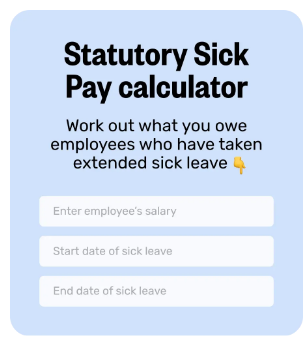
Absence management software helps you record sickness and spot any obvious patterns before they become a bigger problem. Small businesses must also be aware of Statutory Sick Pay (SSP), which is the minimum amount you must pay an employee
when they're off sick.
The FWA has enforcement powers over statutory pay, which means your small business
could be exposed if your records are incomplete or inaccurate. Two SSP changes under the Employment Rights Act 2025 came into effect on 6 April 2026, and it’s important that all small businesses are aware of them.
-
SSP is now payable from the first day of sickness absence. The previous three unpaid waiting days no longer apply
-
The lower earnings limit has been removed, meaning part-time staff, lower-paid employees and variable-hours workers now qualify for SSP
On top of managing sickness absence, there’s another important type of leave you need to keep track of - holiday. Holiday management software lets your team request and track time off without creating a manual paper trail. Getting holiday entitlement right has become trickier since April 2024, when the Working Time Regulations were amended to change how irregular-hours and part-year workers accrue holiday.
And since 6 April 2026, the Employment Rights Act now requires you to keep records of annual leave and holiday pay for at least six years. According to Acas, you must record:
-
Holiday taken
-
Holiday carried over from previous years
-
Holiday pay, including bonus or commission calculations
-
Any payments in lieu of holiday when an employee leaves
Under the new rules, these workers build up holiday at 12.07% of the hours they work in each pay period. If you get this wrong, you risk underpaying your staff, and the Fair Work Agency can investigate and issue financial penalties.
Breathe’s approach to holiday tracking
Breathe's staff holiday planner takes the calculations off your plate with the following features:
-
Automatic entitlement calculation for part-time workers and pro-rata leave, including bank holidays and carry-over
-
Self-service leave requests via the Breathe mobile app. Your team logs in and submits their preferred dates, which you can approve instantly
-
Shared team calendar with instant clash notifications
-
The option to provide a reason when you decline a leave request, keeping things fair and avoiding misunderstandings

Breathe’s approach to absence management
To meet regulations, you must keep accurate absence records from the first day of sickness.
Breathe's absence management tool keeps all your sickness records in one secure place and gives you the visibility to manage absence proactively. Some features that will support you include:
-
Manager dashboards that show who's off, who authorised the absence and who's currently out of the office
-
Automatic Bradford Factor calculations (a formula commonly used in HR to measure the business impact of employee absence) with insights on frequent short-term absences
-
Customisable trigger rules that flag when someone reaches a set threshold of absences or Bradford Factor score
-
Employee self-reporting via the Breathe mobile app, where staff can log sickness, view their total sickness days taken, absence period count, Bradford Factor score and previous instances of sickness
-
Storage for sick notes and return-to-work documents alongside absence records
“Our point of reference is our previous absence management system. Breathe does just about all our previous system did, but a whole lot more. Plus, it's lower-cost! We now have a shared employee database, including a dynamic org chart, staff directory, and holiday calendar.”
– Mike A., VP of Client Services
3. Performance management
Performance management software gives your managers a structured way to track progress and share feedback with your employees throughout the year. If someone’s performance ever falls short, the software is also the place where you create and store improvement plans and document the support you’ve offered to individual employees.
This is important because it creates clear expectations and reduces guesswork for employees and managers when it comes to professional development and compensation. And from January 2027, tracking performance will be vital when the qualifying period for unfair dismissal reduces from two years to six months under the Employment Rights Act 2025. This means if you ever need to dismiss someone due to poor performance, they can claim unfair dismissal after only six months of service, rather than two years. If a dismissal is challenged at tribunal, you'll need to prove:
-
You raised concerns about the employee’s performance
-
Your employee had a fair chance to improve
-
You followed a consistent process
These points are much harder to prove if you haven’t kept proper performance records.
Breathe’s approach to performance management
Breathe's performance management tools give your managers a practical framework for staying on top of this, with:
-
One-to-ones and performance appraisals logged in one place and a full history of every conversation
-
Individual and team goal-setting, with real-time progress tracking
-
Continuous feedback tools so performance conversations happen throughout the year, not just at annual review time
-
Kudos peer recognition, letting your team celebrate great work between themselves
4. Recruitment and onboarding
Recruitment software gives you a single place to manage the full hiring process, from posting a vacancy to making an offer. The right platform keeps a record of every decision you make. This helps you meet your employer responsibilities set out in the Equality Act 2010, which makes it unlawful to discriminate against candidates on the basis of protected characteristics, such as gender, age, disability, sexual orientation, or race (along with many others.) If a rejected candidate raises a discrimination claim, you must prove your hiring process was consistent and your decisions were based on merit rather than bias.
And good software doesn’t stop with the recruitment process. Once you’ve hired the right person, the experience they have in their first few weeks influences how quickly they become productive and how welcome they feel. Onboarding software helps you manage that process consistently, so your new starter has everything they need before they pick up their first piece of work.
The right platform also gives you a dated record of what you communicated and when during those first few weeks and months. For example, since April 2026, new starters have day-one rights to paternity leave and unpaid parental leave. And for October 2026, employers have a new duty to inform their employees of their right to join a trade union. Making sure you clearly communicate those rights from the start is part of getting onboarding right.
Watch this on-demand webinar to hear about all the employment law changes from April to October 2026.
Breathe’s approach to recruitment
Breathe’s Recruitment module is an optional add-on for your small business. It offers an easy-to-use applicant tracking system without the complexity or cost of a standalone tool. Its features include:
-
A built-in application form so candidate details are collected consistently from the start
-
A candidate pipeline where you can add notes, assign applicants to recruiters and shortlist or archive at each stage
-
The option to tag archived candidates so strong applicants are easy to find when a new role opens up
-
One-click conversion of a successful applicant to an employee record, so their HR profile is accurate from their first day
Breathe’s approach to onboarding
Breathe's onboarding software is built into its core HR offering. It lets you build tailored workflows for every new starter. Key features include:
-
Custom onboarding task lists with deadlines, assigned to anyone in the business
-
Automated email reminders so you don’t have to chase anyone manually
-
Document sharing and acknowledgement tracking built into the onboarding flow
-
A full audit trail of completed HR tasks and signed documents from day one
5. Flexible working request management
Flexible working request software gives you a formal process for handling requests, from the moment an employee submits their request to the final decision and any appeal.
Since April 2024, every employee has had the right to request flexible working from their first day in a new job. They can make two requests in any 12-month period, and you have two months to respond to each. If you need to refuse a request, you must consult the employee first and have a legal reason for turning them down.
Note: You can learn about the eight statutory grounds for refusal and how to handle flexible working requests fairly in Breathe's free training course.
From 2027, the Employment Rights Act 2025 prevents employers from refusing a request without good reason. Employers will need to explain in writing why they consider the refusal reasonable and keep documentation throughout the process.
Managing requests informally, for example by email, or in an undocumented conversation, makes it difficult to show that you've handled each one fairly and consistently. An auditable process protects you and gives your employees confidence that you’re taking their requests seriously.
Breathe’s approach to flexible working requests
With Breathe, employees submit flexible working requests directly through the platform. Our platform offers:
-
An evidence-based submission process so requests are logged and dated from the start
-
Manager notifications with built-in reminders to respond within the two-month deadline
-
The ability to document outcomes and reasons for any refusal
-
Reporting on how many requests an employee has made in the past 12 months
6. Reporting and analytics
HR reporting software makes it easier to act on your people data once you’ve collected it. Rather than pulling information from different places and piecing it together in a spreadsheet, advanced reporting tools give you a live view of what's happening across your business.
The Fair Work Agency can request pay, leave and working time data from employers at any time. Producing accurate, up-to-date records quickly is a sensible preparation step. Real-time reporting also helps you spot problems before they escalate; for example, a spike in absence in one team might point to a leadership problem.
Breathe’s approach to reporting and analytics
Breathe's reporting and analytics software gives you a filterable view of your workforce data, with:
-
Ready-made reports covering turnover, sickness and absence, starters and leavers, salaries and benefits, and time logs
-
A burnout monitor that flags employees who haven't taken holiday recently, so you can check in before they reach breaking point*
-
Employee Net Promoter Score (eNPS) surveys that help you understand your team’s morale*
-
All reports exportable directly to Excel for further analysis
“Breathe provides good HR Reporting. The layout is user friendly, easy to navigate and update, and reporting is very beneficial for HR KPI report outs.”
– Becky Y., senior HR manager
*One thing to note: the burnout monitor and eNPS features are available on Breathe’s Regular plans and above.
7. Training and compliance
Training your people is one of the most cost-effective investments a small business can make. It builds the skills your business needs without the cost of hiring them in, and gives your team a strong signal that you're invested in their growth.
Training software built into your HR platform makes this straightforward to manage, with courses your people can select and complete at their own pace, and a useful record of progress for you.
Changes introduced by the Employment Rights Act 2025 have made training and
compliance particularly relevant. Since 2026, employers have a new and increased duty to prevent sexual harassment, and employees have extra whistleblowing protections available to them.
A manager who doesn't know the rules is more likely to make a decision that exposes your business to a claim. Training on performance management processes, onboarding and offboarding procedures and discrimination and equal opportunity law gives your team the knowledge to handle situations consistently and fairly, before they put your business and your people at risk.

Breathe’s approach to training and compliance
UK businesses have mandatory training obligations related to long-standing employee rights and legislative areas. But these are easy to overlook when you're running a small team. Breathe’s Learn module helps you keep on your responsibilities with access to 100+ UK-specific online courses including:
-
Courses aligned to UK legislation including the Equality Act 2010, UK GDPR, the Modern Slavery Act 2015 and the Bribery Act 2010
-
Courses covering sexual harassment prevention, discrimination and equal opportunity, mental health awareness and other key employee rights
-
Management skills courses covering performance management, onboarding and offboarding, and effective communication, that help your managers follow the right process at every stage of the employee lifecycle
With Breathe Learn, you'll get:
-
Bulk course assignment for individuals, departments or your whole company
-
Scheduled completion dates with automatic reminders
-
Built-in assessments and shareable certificates so learning feels rewarding and is properly evidenced
-
A centralised learning record showing completed, in progress and overdue training at any time
-
Employee self-enrolment so your people can choose which additional skills they’d like to grow and develop
8. Health and safety management
Every employer in the UK has a legal duty to protect their workers under the Health and Safety at Work Act 1974. The Health and Safety Executive (HSE) enforces that duty and has the power to inspect workplaces, issue enforcement notices and prosecute employers who fail to meet their obligations. Under RIDDOR, certain workplace incidents must also be reported to the HSE directly.
But like HR, health and safety is another area that can sometimes get left behind in growing businesses with competing priorities. Health and safety management software gives you a central place to manage your safety records alongside your employee data. For small businesses without a dedicated H&S team, having HR and health and safety together in one system makes it far easier to stay on top of these responsibilities. This typically includes:
-
Risk assessment logging
-
Fire warden and safety role tracking
-
Centralised safety task management
Part of your health and safety responsibilities is knowing how to protect your workers from sexual harassment. From October 2026, the Employment Rights Act 2025 requires you to take "all reasonable steps" to prevent sexual harassment from happening and a documented workplace risk assessment proves you've met that duty. Your responsibilities extend to preventing third parties, like customers, clients, and contractors from sexually harassing your staff.
From 6 April 2026, reporting sexual harassment also became a qualifying disclosure under whistleblowing law. Workers who report it have full whistleblower protection. Your whistleblowing policy needs to reflect that change, and your employees need to know about it.
Breathe’s approach to health and safety management
Breathe's Health & Safety module gives you a digital toolkit for managing this alongside your everyday HR, containing:
-
Risk assessment creation, storage and automated review cycles, with AI-generated summaries highlighting key hazards, controls and outstanding actions at a glance
-
Version control on risk assessments so employees always reference the most current document, with a full audit trail
-
Incident and near-miss logging, with evidence-ready reports for regulators or insurers
-
Safety role tracking with proactive alerts before First Aider and Fire Warden certifications expire
-
Employee hazard reporting so your team can flag concerns as they happen
-
Digital policy acknowledgements with a real-time audit trail, so you can show who has seen what and when

9. Expense management and payroll
Making sure employees are paid correctly and on time isn’t just the right thing to do – it’s a legal requirement. If you fall short, you could face investigations and requests for detailed pay records from the Fair Work Agency, putting your business at risk of penalties and scrutiny.
And the impact doesn’t stop there. How you handle pay sends a powerful message about your culture and values. Consistently getting payroll right helps protect your reputation, builds trust with your people, and shows that you’re a responsible employer who takes their obligations – and their team – seriously.
Managing employee pay and expenses manually can feel manageable for small businesses. But if your team starts to grow, your HR administrative tasks can quickly get out of control as you become bogged down by spreadsheets and paper receipts.
Expense management software is a useful solution that lets your team submit their receipts to a single location, and your managers can approve or query them. Additionally, connecting your HR platform to your payroll software means you only need to enter employee data once. New starters, leavers and salary changes flow through automatically, so your HR and finance teams aren't rekeying the same information into two different systems, which can result in human error.
Breathe’s approach to expense management
Breathe Expenses is an add-on module that connects directly to your HR data. Its key features include:
-
Simple claim submission and receipt upload from the Breathe mobile app or desktop
-
Spending limits and company expense rules built in, so employees receive a helpful notification before submitting a claim that falls outside policy
-
A built-in mileage calculator
-
Manager approval workflows that don’t require a separate login
-
The option to export expense data so it’s ready for payroll reconciliation
Breathe’s approach to payroll
Breathe integrates with Xero Payroll as part of your existing Breathe subscription. You’ll need to create a separate subscription with Xero. Here’s how it works:
-
You’ll log in to your Xero account through the Breathe portal and link your accounts
-
You can select any employee data you don't want to synchronise with Xero
-
Breathe will flag any gaps so you can add any missing payroll details
-
You’ll double check that your Breathe employee data matches up correctly with your Xero data
Once you’ve set everything up, your employee data syncs automatically between the two platforms and payslips are uploaded directly to each person's Breathe profile after every payroll run.**
**It’s worth knowing that Breathe’s Rota, Time and Attendance module isn’t included in the integration, so any hours logged in the scheduling module won’t feed across to payroll automatically.
Optional feature for shift-based teams: Scheduling, time, and attendance
If you employ shift workers, an all-in-one HR platform with scheduling functionality saves you time and removes the risk of rota errors that could leave you short-staffed or overspending on hours.
This HR feature also complements your responsibility to keep working time records. Storing timesheets electronically, rather than on paper or in spreadsheets, gives you an auditable record you can produce quickly if needed. By doing so, you’ll also have accurate time records for your staff, which supports payroll processing for your hourly-paid staff.
Breathe’s approach to scheduling, time, and attendance
Breathe's Rota, Time and Attendance module is an add-on designed specifically for SMEs with teams of 10 to 250 people. It offers:
-
Drag-and-drop rota building based on reusable templates
-
Instant sharing with your team members
-
Automatic clash alerts when approved leave overlaps with scheduled shifts
-
Employee self-service via the People Portal app, so your team can accept or decline their shifts, swap with colleagues, and clock in and out on the go
-
Automatic timesheet generation from clock-in and clock-out data
-
Timesheets stored securely in the cloud

For larger or more complex shift-based operations, Breathe's sister company, Rotageek, offers an AI-powered workforce scheduling platform designed for teams with more complex rota needs.
How to choose the right all-in-one HR software for your business
With so many HR platforms on the market, it can be hard to know which to choose for your small business.
If you'd like a quick steer, ask ChatGPT which HR software is right for your business. It's a good way to narrow down your options before doing a deeper dive into the considerations below.
Look for one platform that covers everything you need
Many small businesses end up with several tools that each handle a single part of HR; for example, a separate rota system, a standalone LMS, and a different platform for performance reviews. Over time, this results in complicated admin workflows, with data spread across different systems and admin that duplicates itself.
The right all-in-one HR system covers your core HR needs, meaning you don’t need separate software for each. Modules for specialist HR areas like recruitment or learning are all activated within the same platform, so accurate data flows freely across all your workflows with no extra effort on your part.
Choose cloud-based software
Cloud-based HR software is accessible from anywhere and removes the risk of your records falling offline if a server fails. For small businesses, the flexibility and security of on-demand HR software makes a real difference, whether you’re approving a leave request from your phone or pulling up an employee record at short notice. And if the FWA ever asks you to provide evidence, your cloud-based software makes it easy to source and submit the information, wherever you or your team is based.
Check for UK-specific compliance features
Look for a platform that handles statutory holiday calculations correctly, stores data in line with UK GDPR and supports SSP tracking. While there are plenty of HR tech companies in the market, many are aimed at a global or US-only market. UK small businesses may struggle to partner with one of these vendors without customising their product extensively.
Look beyond the monthly price
The monthly or annual subscription is only part of what you'll pay for HR software. Remember to factor in some of the following costs:
-
Implementation time
-
Training costs (included for free with Breathe)
-
The level of customer support included
-
Additional features or upgrades
Breathe’s core HR platform will cover your essential HR needs from day one. You can add specialist modules to help you comply with UK employment law as soon as your business needs them, rather than having them bundled into a higher price tier from the start. Our approach means you only pay for what you use. Breathe also prices by employee size bracket rather than per individual employee, which keeps costs predictable as your headcount grows. You can learn more about specific plan and module costs on the Breathe pricing page.
“My clients are now able to process leave requests, sickness requests and store documents on their own. And you can get somebody set up in half an hour. As soon as I’ve got them on, they can just start using it.”
Why small businesses choose Breathe’s all-in-one HR software
Breathe is built specifically for UK small and medium-sized businesses. Every feature is designed with UK employment law in mind, from statutory holiday calculations and GDPR-compliant data storage to SSP tracking and the record-keeping requirements introduced by the Employment Rights Act 2025.
“Breathe has streamlined our HR processes and saved us time on admin. Breathe is incredibly user-friendly, even for those who aren’t tech-savvy. I especially like how clean and intuitive the interface is, everything from booking leave to reviewing performance is straightforward. It’s easy to navigate, requires very little training, and gives a clear overview of our team at a glance. The self-service functionality has empowered our team to manage their own records, which saves us so much time.”
– Mona V., Head of Strategy for a small business
-
Breathe’s core HR features give you everything you need to manage your people day-to-day, including employee records, document management, holiday and absence, performance, onboarding, flexible working requests and reporting.
-
Add-on modules let you build on that foundation as your business grows. Choose from Breathe’s Recruitment, Expenses, Rota Time and Attendance, Learn, and Health & Safety modules.
HR software manages your processes and keeps your records in order, but there are times when you need expert advice too. If you're in need of expert HR or legal support, you can contact any of the 1,000+ consultancies which are part of the Breathe Partner Programme. Whether it's updating contracts for the Employment Rights Act changes or handling a situation like a disciplinary procedure, these consultants take on small business clients everyday and help them get set up with HR software that makes life easier.
Over 17,000 UK businesses trust Breathe to manage their HR. If you’re interested in joining them, you can try Breathe for free for 14 days and read our detailed guide on HR software for SMEs for more information, plus a practical checklist.

Frequently asked questions about all-in-one HR software
What's the best HR software for small businesses in the UK?
The right HR software depends on your team size and what you need to manage. If you’d like to use a platform built specifically for UK SMEs, with compliance features that help you meet UK employment law and the option to add modules as you grow, consider Breathe. You can try it for free for 14 days.
How do small businesses manage HR without a dedicated HR team?
In many small businesses, there’s often only one HR role or HR responsibilities are split out between owners, office managers and operations staff. But juggling HR alongside other tasks can be trickyThe key is having deliberate processes in place, so that whoever owns HR can manage it consistently without it taking over the week.
Does HR software handle payroll?
Some HR software includes built-in payroll functionality, while others connect to dedicated payroll platforms through an integration. Breathe takes the second approach, integrating with Xero Payroll to sync employee data between the two systems. You won't need to rekey information manually, and the integration is free to set up with an existing Xero subscription.
What is an HRIS, and do small businesses need one?
HRIS stands for Human Resource Information System, which is software that centralises your employee data and HR operations in one place. Small businesses don't need an enterprise-grade HRIS. Instead, a cloud-based platform designed for SMEs covers the same core functions at a price point and scale that makes sense for smaller teams.
How much does HR software cost for a small business?
HR software pricing varies by platform and team size. Most providers charge a monthly fee per individual employee, which can make costs harder to predict as your team grows. Breathe takes a different approach, pricing by employee size bracket rather than per head. Plans start from £24 per month for micro businesses.
Is there free HR software?
Some providers offer free tiers with limited features, but these typically restrict the number of employees and leave out the compliance and reporting tools a growing business needs. Breathe offers a 14-day free trial with no card details required, so you can test the full platform with your own data before committing.

 HR policies and processes
.png)