Checklist: Redundancy transition and outplacement support
In partnership with Clover HR
In partnership with Clover HR
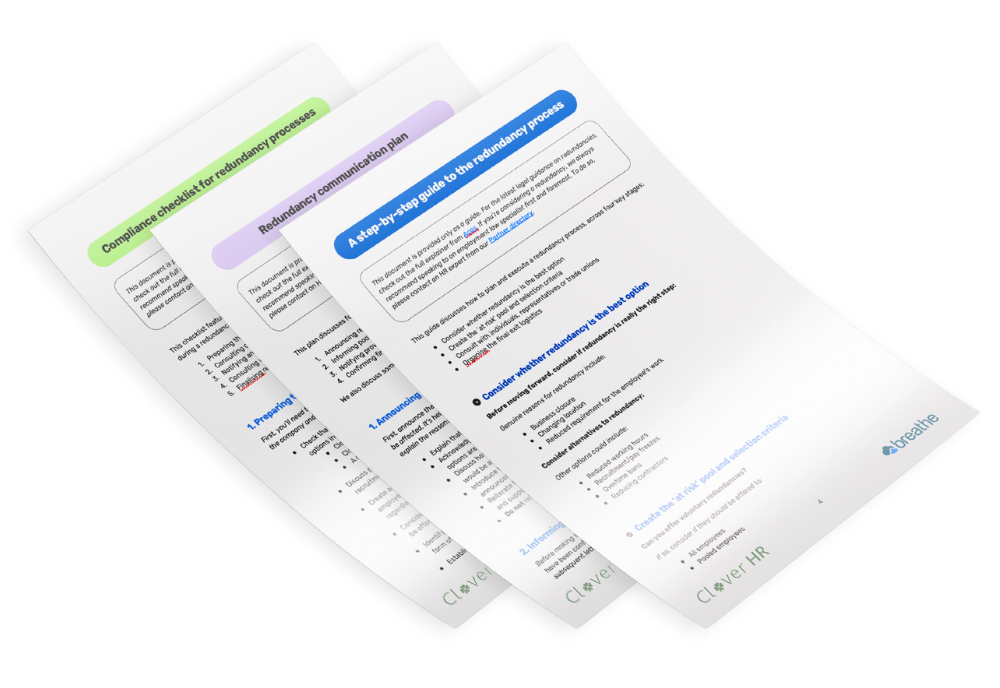
This resource was created in partnership with Lynn Burman, Commercial Director at Clover HR: an expert HR consultancy and trusted Breathe Partner. It’s intended as a general guide only. For the latest legal advice on redundancies, check out the full explainer from Acas. And if you’re considering a redundancy – or need HR advice of any kind – it’s always best to speak to an employment law specialist. You can get in touch with Clover HR here or find additional support through our Partner Directory.
When employees are made redundant, their employers are required to take reasonable steps to help them through the transition and find alternative work. This checklist suggests ways that employers can do so, both before and after the redundancy takes place.
None of the options this checklist introduces are compulsory, and no employer is required to offer all the support suggested. Nonetheless, these options are effective ways to demonstrate your compliance and provide valuable support to employees facing redundancy.
While the process is taking place, there are several steps you can take to help and support those employees under consideration for redundancy:
Offer support such as financial advisors or counsellors who can help employees going through the redundancy process.
Designate a clear point-of-contact in the organisation who employees can come to for help, questions, guidance and support.
Organise regular check-ins between ‘at risk’ employees and managers and/or HR representatives, creating a proactive channel of communication.
Provide access to digital learning tools that employees can use to upgrade their skills while the process takes place.
Offer funding for training or certification opportunities.
Enable ‘at risk’ employees to take time off to look for alternative employment.
Explain what additional employment opportunities are available in the organisation and what skillsets they may be a good match for.
When the final decisions have been made, there are several other steps you can take to ease the employee’s transition out of the company and help them find new work:
Give employees compelling character references.
Post on social media or in private communities, asking for relevant job postings and offering to make referrals.
Provide redundant employees with access to an outplacement service, which can offer resources, support and guidance, which is specifically designed to help redundant employees find new work.
Ask continuing employees to reach out to their redundant colleagues, offering support and suggesting potential jobs they’ve seen elsewhere.
Offer emotional and financial support to redundant employees.
Consider what contacts in your network might be able to help with career coaching, CV writing or alternative employment for affected employees.
Provide access to online skills training or other relevant resources.
Refer redundant employees to recruiters, job boards, private communities or specific job adverts.
Inform employees of free services like the Government’s Rapid Response Service that can help individuals find new work.
Consider what goodwill gestures the company might like to make to thank staff for their service.
Worried about staying compliant during the redundancy process?
Whether you’re managing a workplace restructure, navigating a redundancy process or facing another HR challenge, Breathe helps you stay compliant, organised and in control. And if you need personal, expert advice, Clover HR (or one of our trusted partners) can guide you through it all.

What are outplacement services and how do they help employees facing redundancy?
Outplacement services are practical support programmes designed to help employees find a new job after redundancy. They often include tailored support like CV writing, interview preparation and LinkedIn advice. Sometimes it includes career coaching - this involves one-to-one sessions with professional consultants to help assess skills, identify career goals and navigate the impact of job loss.
For many people facing redundancy, the process can feel overwhelming. Outplacement helps to reduce that stress by offering both expert guidance and emotional support. It’s been shown that individuals who receive professional outplacement support typically find new roles up to twice as fast as those who search alone. This kind of structured support can also help protect your organisation’s reputation and reduce the risk of claims or disputes. It can also reduce redundancy-related costs including severance pay and extended notice periods.
How can I support employee engagement during a redundancy process?
Redundancies don’t just affect those leaving – they impact everyone in your team. Remaining employees often experience uncertainty and stress, which can affect morale, focus and productivity.
That’s why supporting employee engagement throughout the redundancy process is so important. Open, honest communication helps. So does offering meaningful support to departing employees – such as outplacement services – which shows your team that people are treated with care and respect. When managed compassionately, a redundancy process can actually strengthen trust across your organisation.
Are employees entitled to paid time off to find a new job?
Yes. Employees who’ve been given notice of redundancy are legally entitled to paid time off to look for work or attend interviews, as long as they’ve worked continuously for two years or more.
Giving employees this time – along with access to outplacement support or job search resources – helps them focus on their next opportunity and can speed up the transition into a new role. It’s a simple step that makes a big difference to someone’s ability to move forward confidently.
Are outplacement services the same as recruitment agencies?
Outplacement support is a skill-building and advisory service, not a recruitment agency, meaning coaches do not typically find jobs for employees.
But these services do help people move on faster. Research shows employees who receive this kind of support often find a new job up to twice as fast.
What does a fair and compliant redundancy process look like for employers?
Redundancies can be complex and emotionally charged – which is why it’s so important to follow a clear, legally sound process.
Employers must consult with every employee who is at risk of redundancy before making any final decisions. If more than 20 redundancies are being proposed, a formal group consultation is required. These steps aren’t just legal obligations – they help build trust, ensure fairness, and reduce the risk of claims or disputes.
It also helps to ensure that line managers in your business feel supported and prepared to lead difficult conversations with confidence and care. With the right training and guidance, they can play a key role in communicating clearly, answering questions, and helping people feel seen and heard.
Overall, being open and clear from the outset helps everyone feel informed and respected, even in tough circumstances. And getting the process right sets the tone for how your organisation is perceived – by those leaving, those staying, and your wider network.
To help you manage the process with clarity and care, we’ve created a set of practical resources – including a restructure checklist, a redundancy communication plan, and templates for consultation meetings and at-risk letters. You can download them all in a single toolkit here.
How can employers support people during redundancy and also protect their own reputation?
Redundancies don’t just affect those leaving – they ripple through the whole organisation. If handled poorly, they can damage morale, productivity and even your brand.
Clear, compassionate communication helps to reduce anxiety among remaining employees and maintain engagement across the wider team. It’s also important to support those leaving the business. Outplacement services – often included as part of a severance package – provide tailored, practical and emotional support to help people move on with confidence.
This kind of offboarding not only supports individuals but protects your business too. Employees who feel supported are less likely to seek redress, and far more likely to speak positively about their experience. That can help maintain customer trust and even strengthen your ability to attract future talent.

.webp?width=564&height=513&name=Group%2029%20(1).webp)