Business restructure process: A step by step checklist
In partnership with Clover HR
In partnership with Clover HR
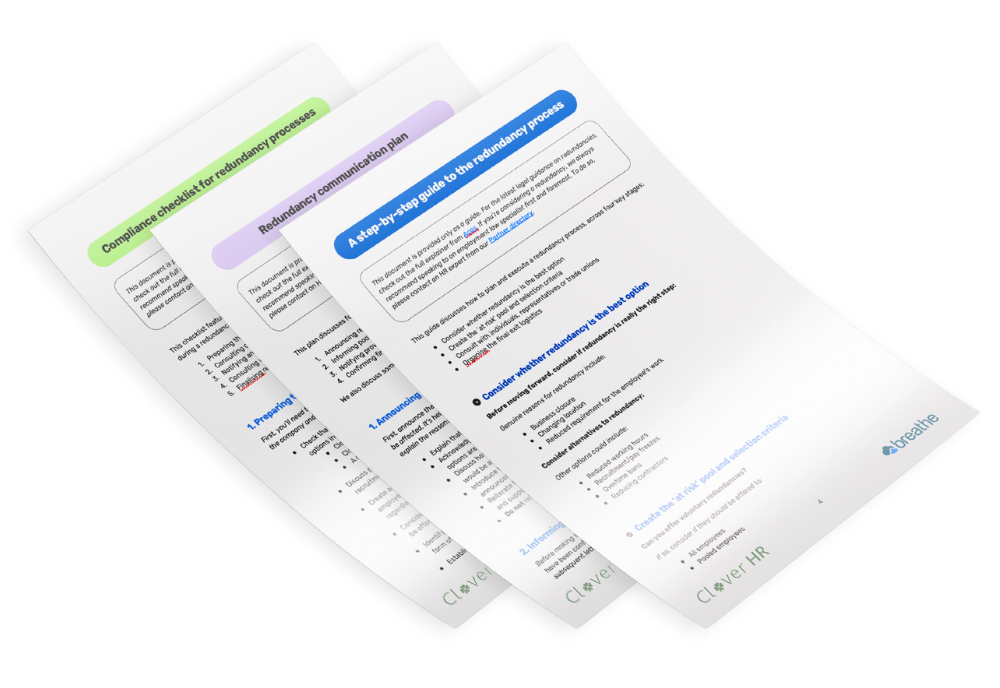
This resource was created in partnership with Lynn Burman, Commercial Director at Clover HR - an expert HR consultancy and trusted Breathe Partner. It’s intended as a general guide only. For the latest legal advice on redundancy processes, check out the full explainer from Acas. And if you’re considering making redundancies – or need HR advice of any kind – it’s always best to speak to an employment law specialist. You can get in touch with Clover HR here or find additional support through our Partner Directory.
This restructuring process checklist discusses four main stages to planning and executing a workplace restructure, including:
First, it’s helpful to understand why you’re exploring a workplace restructure and if this is the right choice for the business. To do this, consider:
What are the key business goals and changes you want the workplace restructure to deliver? Options could include:
Reducing business costs
Improving efficiency and performance
Adapting to a changing market
How does the current organisational structure prevent you from achieving your business goals?
Which alternative options are available? These may include:
Exploring different working styles or models
Adopting more flexible or cross-functional team structures
Re-evaluating leadership training and policies
Outsourcing
Next, consider the impact of the planned changes and how you can mitigate them.
Will the restructuring process involve making redundancies? If so, how many? Extra legal and compliance requirements will be required if you’re making employees redundant.
What is the anticipated buy-in from HR, senior executives or the C-Suite?
Do the potential gains of the workplace restructure outweigh the disruption and conflict it may cause?
It’s important to understand what skills, resources and information you have at your disposal before making any key strategic decisions.
Have you considered views from managers and the wider business when identifying the goals of the workplace restructure?
Do you have the internal skills to manage the restructuring process in an effective and compliant way?
If not, what external resources may you need?
Are company job role descriptions up to date? It’s helpful to ensure they are before starting the restructuring process.
Next, it’s time to redesign the org chart based on the skills you have and those you need.
Consider whether you’ll need to reduce the size of the workforce or simply change the structure of the existing employee roles.
Go through both the org chart and individual job role descriptions, identifying where skills, employee roles and functions are:
Already clearly aligned with organisational needs. These can generally be left alone.
Valuable, but not necessarily being managed/utilised in the best way. Here, people may need to be moved, job role descriptions altered or managers changed.
No longer useful for the business. In this case, you may need to offer employees suitable alternative roles, change job descriptions or consider making redundancies.
Needed, but don’t currently exist. Here, you’ll have to consider external hires, outsourcing or skills training.
Discuss how existing and new teams can be empowered to work more efficiently. Consider:
Investing in skills training
Exploring the potential of new technology
Considering new project management platforms, software tools, etc.
Re-evaluating workflows and processes
Creating a change-focused company culture
Worried about staying compliant with employment law?
Whether you’re managing a workplace restructure, navigating a redundancy process or facing another HR challenge, Breathe helps you stay compliant, organised and in control. And if you need personal, expert advice, Clover HR (or one of our trusted partners) can guide you through it all.
What does restructuring a business actually involve?
Restructuring a business means making significant changes to how the organisation is set up or how work is done. That could include changes to the organisational structure, individual job roles, reporting lines, or even the wider legal structure of the business.
Does a workplace restructure always mean redundancies?
No. A workplace restructure doesn't automatically lead to job losses. Employers are expected to explore every alternative role or redeployment option before moving to a redundancy situation.
That includes looking at whether employees can adjust into different roles, be retrained, or move into suitable alternative employment elsewhere in the business. Redundancies should only happen where there's a sound business reason and no reasonable alternatives remain.
What are employee rights during the restructuring process?
During a restructuring process, employees have clear rights that employers must respect. This is especially important where significant changes to a job role or employment contract are being considered.
Employers are legally required to consult with employees in good faith and, where appropriate, involve elected employee representatives or a recognised trade union. Employees should be given the opportunity to ask questions, raise concerns and explore alternatives.
Any changes must follow a fair and lawful procedure, with decisions clearly explained and properly documented. This helps ensure the process remains legally compliant and fair for everyone involved.
Can an employer change someone's job role or employment contract?
Changes to a job role or employment contract usually need the employee's agreement. Employers can't impose changes without consultation, unless there's a valid flexibility clause in the contract.
If changes are proposed, they should be discussed openly, taking into account individual personal circumstances. Any process should follow a fair and lawful procedure to remain legally compliant and avoid disputes later on.
What happens if an employee is unsure about or turns down an alternative employment?
If an employee is offered a suitable alternative role, they're entitled to a trial period to see if it's right for them. This gives both sides a chance to assess whether the role is genuinely suitable.
If an employee turns down suitable alternative employment without good reason, they may lose their redundancy pay. That's why it's important to clearly explain the job role, listen to their concerns, and document decisions carefully.
How can employers maintain morale during the restructuring process?
Restructuring can be unsettling, so maintaining morale needs to be a priority. Clear, honest and transparent communication helps reduce uncertainty and anxiety, and helps build trust.
Regular updates, clear explanations of what's changing and why, and a commitment to keeping employees informed can make a real difference. Managers should also be mindful of individual personal circumstances and offer support where possible.
Strong leadership, empathy and consistent messaging help people feel respected, even during difficult periods of change.
How can employers know when they need to move from restructuring to making redundancies?
Employers should only move towards making redundancies once all reasonable alternatives have been fully explored. This includes reviewing whether roles can change, whether employees can adjust into different positions, or whether a different role or alternative employment opportunity exists elsewhere in the business.
Redundancies should be a last resort, supported by a clear sound business reason, such as long-term financial difficulty or structural change that can't be resolved through reorganisation alone. Employers must be able to show that they've followed a fair process, considered the wider organisational structure, and looked at options beyond job losses.
Clear records, early consultation and expert advice help ensure decisions are balanced, defensible and people-first.
Can an employee be made redundant during their probation period?
Yes, an employee can be made redundant during their probation period, but the same legal process must be followed.
Can employees appeal a redundancy decision?
Yes, employees can appeal a redundancy decision if they believe the process wasn’t followed correctly or that they were unfairly selected. The appeal should be made in writing, and the employer must respond and consider the reasons for the appeal.
What is a redundancy selection process, and how should it be done?
The selection process involves choosing which employees will be made redundant. Employers should use fair and transparent criteria, such as performance, skills, qualifications, and attendance, to ensure no discrimination occurs. Employees should be consulted about the selection process.
Can an employee be rehired after redundancy?
Yes, if an employee is made redundant and their position is later re-established or similar roles become available, they may be offered re-employment.
What support can employees receive during redundancy?
In addition to redundancy pay, employers are encouraged to provide outplacement support, such as helping employees find new jobs, offering career advice, or providing training. This support can help soften the impact of redundancy and assist employees in moving forward with their careers.
What happens if the redundancy process is not followed correctly?
If the redundancy process is not followed correctly, employees may have grounds to file a claim for unfair dismissal. It’s essential for employers to comply with redundancy laws and ensure the process is transparent, fair, and in line with UK employment law.
Do I need to make redundancies if my business is struggling financially?
While redundancy may be a necessary option for reducing costs, it is not the only solution. Employers should first explore other alternatives, such as reducing working hours, offering voluntary redundancy, or using furlough schemes (where available). Redundancy should only be considered when other options have been exhausted.
Disclaimer: For the latest legal guidance on redundancies, check out the full explainer from Acas. If you’re considering a redundancy, we always recommend speaking to an employment law specialist first and foremost. To do so, please contact an HR expert or reach out to our Partner team, who can put you in touch with an HR consultant.

.webp?width=564&height=513&name=Group%2029%20(1).webp)