A step-by-step redundancy guide
In partnership with Clover HR
In partnership with Clover HR
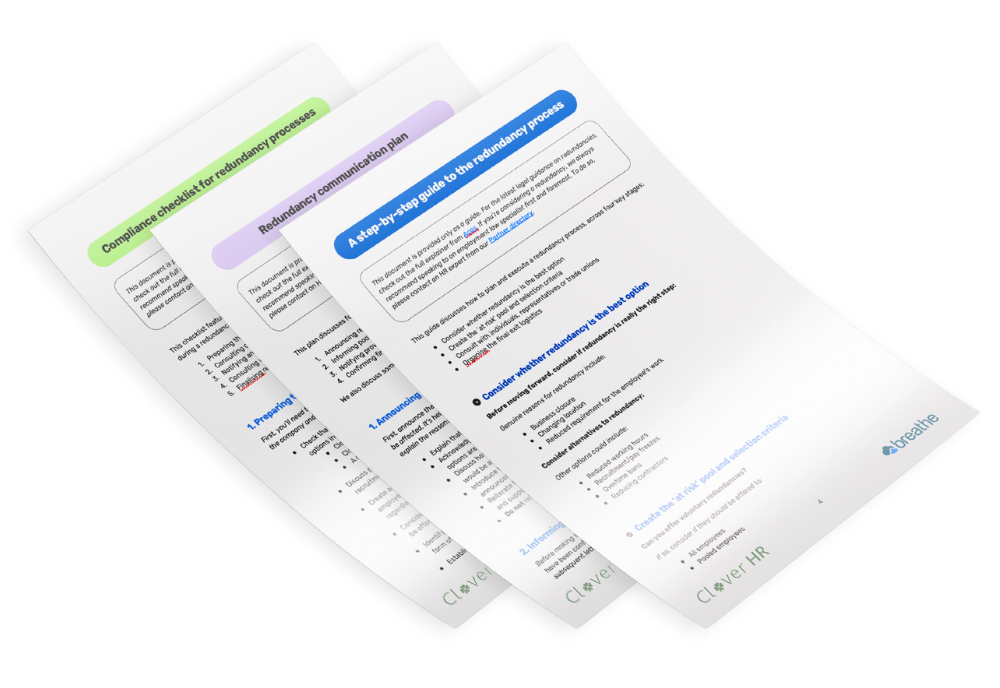
There are genuine business cases where redundancy is classed as the only way forward. Ahead of any redundancies there must be a compelling, robust business case based on one more of the following:
Lack of financial performance
Organisational changes such as outsourcing or restructure
Operational changes such as stopping the provision of a service
Technological changes such as the automation of a process
Other options could include:
Reduced working hours
Recruitment/pay freezes
Overtime bans
Reducing contractors
If so, consider if they should be offered to:
All employees
Pooled employees
Specific teams or levels of seniority
Consider whether individual or collective consultation rules apply. The rules depend on how many employees are being made redundant within 90 days at the same location*:
0-20 employees: If fewer than 20 employees are being made redundant within a 90-day period at the same location, individual consultation rules will apply
20+ employees: If more than 20 employees are being made redundant, collective and individual consultation rules both apply
*This is currently defined as a single branch or business location, not the whole business. The Employment Rights Act will upgrade this to the whole organisation.
Think about:
What type of work is no longer needed
Which employees will be affected
How many total redundancies will be made
Special rules apply for pregnant women and others who are due to go, are currently on or have recently been on family leave. Generally, these employees are protected from redundancy, though you should check Acas for the most recent rules. This applies to:
Pregnancy
Maternity leave
Adoption leave
Shared parental leave
Create a clear set of fair selection criteria to evaluate employees, such as:
Work quality
Relevant skills and qualifications
Attendance/disciplinary record
Productivity metrics
Fill out the HR1 form on the Government website, following these guidelines
0-20 redundancies: No HR1 form needed
20-99 redundancies: Submit the form at least 30 days before dismissals take effect
100+ redundancies: Submit the form at least 45 days before dismissals take effect

This meeting should include:
Explaining the situation and confirming eligibility for redundancy
Making it clear that redundancies are only a possibility
Key points to discuss in the meeting:
This agenda should include:
An explanation of why redundancies are being considered
Details of what the redundancy process will involve
Clarification on whether/how voluntary redundancies or suitable alternative vacancies will be considered
How the selection process and selection pool will work
What official communications employees can expect at each stage
You can find an individual consultation meeting agenda template here.
The letter should include:
A summary of everything discussed in the first meeting
A confirmation of the employee’s right to have employee rep/trade union representation (collective consultation only), to take time off to look for additional employment and to appeal the final decision
A copy of the redundancy selection criteria and scoring guidelines
You can find an at risk of redundancy letter template here.
For collective consultation, follow these guidelines:
Consult with independent, recognised trade unions, if they exist
If not, elect employee representatives from the pooled candidates
Remind employees of their right to have trade union or employee representative support during meetings or disputes
Consider the following requirements:
Discuss the reasons for redundancies and ways to reduce/mitigate their effects
Representatives should be involved in discussions on the scoring system
Consultations must be genuine and held in good faith. Employers must seriously consider suggestions from representatives
Collective consultation should start at least 30+ days before the first dismissal (where 20-99 redundancies will be made) or 45+ days (if 100+ redundancies will be made)
Collective consultation must be complete before any redundancies are confirmed
To ensure fairness:
Rank all colleagues equally, fairly and objectively
At least two managers should be involved in the scoring process
Make sure there is no potential for direct or indirect discrimination based on age, sex, marital status, race, disability, sexual orientation, religion or belief
For those provisionally selected:
Invite employees to a second meeting and send a second letter
In the meeting, confirm the provisional selection, explain the reasons and go over the scores in detail
The letter should summarise the consultation so far, explain the reasons for selection and clarify that decisions are not final and are subject to further individual consultation
For each individual consultation:
Discuss the employee’s scores, the redundancy proposal and the terms of the redundancy
Consider any comments about their scores in good faith
Explain details of potential suitable alternative roles the employee could be offered
Make detailed notes of all conversations and discussion points during the meeting
If needed, adjust scores and the list of provisional candidates based on these conversations
Repeat these steps until you have a final list of candidates
Once a final list is set:
Arrange an additional meeting and a confirmation letter
In the meeting, confirm the dismissals and the redundancy package
In writing, confirm redundancy and other details discussed in the meeting
Remind employees that they still have a right of appeal
If any employees choose to appeal the decision, follow these steps:
Take the employee’s concerns seriously and address them in good faith
Go back to ‘Rank colleagues using the objective fair selection criteria:’ and repeat the process, making any relevant changes from the appeal
If possible, the scoring should be repeated by a different manager, ideally more senior
If no changes are required, confirm the dismissal and issue the final letter again as set out in the previous section
Employees with more than 2 years’ continuous service are entitled to statutory redundancy payments, depending on their age:
Under 22s: Half a week’s pay for each complete year of service
22-41s: One week’s pay for each complete year of service
Over 41s: 1.5 weeks’ pay for each complete year of service
Consider any non-statutory redundancy requirements:
Assign any additional funds defined in employees’ contracts or the company policy
Employees are entitled to notice as well as their redundancy pay:
Employees should be offered either statutory or contractual notice, whichever is greater
You can also dismiss employees immediately if you offer payment in lieu of notice
Employers are required to help redundant employees find new work. This can include:
Referring employees to job boards or adverts
Posting on LinkedIn or in private communities
Leaving references and referrals for the redundant employees
Worried about staying compliant?
Whether you’re managing a workplace restructure, navigating a redundancy process or facing another HR challenge, Breathe helps you stay compliant, organised and in control. And if you need personal, expert advice, Clover HR (or one of our trusted partners) can guide you through it all.

.webp?width=564&height=513&name=Group%2029%20(1).webp)