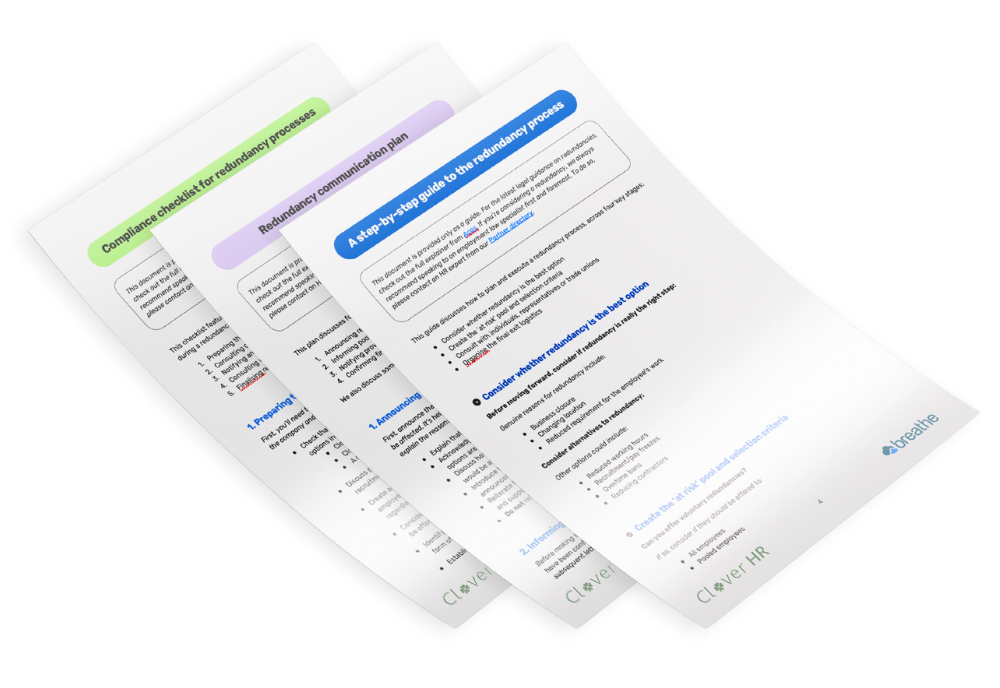
Redundancy consultation meeting agenda for individual consultations
In partnership with Clover HR
This resource was created in partnership with Lynn Burman, Commercial Director at Clover HR: an expert HR consultancy and trusted Breathe Partner. It’s intended as a general guide only. For the latest legal advice on redundancies, check out the full explainer from Acas. And if you’re considering a redundancy – or need HR advice of any kind – it’s always best to speak to an employment law specialist. You can get in touch with Clover HR here or find additional support through our Partner Directory.
All potential redundancies are subject to individual consultation as part of the redundancy consultation process, regardless of the number being considered. This should involve a face-to-face individual consultation meeting with the affected employee, discussing the reasons for the decision and giving them an opportunity to discuss their scores and make suggestions.
This agenda offers a guide for how to structure a meaningful consultation meeting, across three main areas:
First, go over information discussed in previous meetings and letters:
Explain the purpose of this individual consultation meeting, run through the agenda and ask the employee for any initial questions.
Reiterate why the company is considering making redundancies and why the employee’s team is at risk of redundancy.
Remind the employee what voluntary redundancy options are available, if any.
Recap what alternative options have been considered and if any of these measures have been taken on board.
Confirm timelines for the remainder of the redundancy consultation process and recap what decisions have been made to date.
Then, show the candidate the scores they received and explain the feedback provided:
Discuss the selection criteria used to score employees and explain the reasons they were chosen. Recap any decisions made during collective consultation, if relevant.
Take the employee through the scores they were assigned and explain why.
Invite the employee to comment or critique the decisions taken. Take their comments on board in good faith.
If necessary, repeat the scoring process after the meeting, taking the employee’s comments into account.
Round the discussion off by talking the candidate through the rest of the process and what they can expect from here:
Explain what support options are available for staff who are made redundant.
Remind the employee of their right to take time off to look for alternative work and to appeal the final decision when it’s made.
Explore alternative employment options that might be available elsewhere in the company, and whether these are an appropriate fit for the employee’s skills.
Discuss the company redundancy policies and what redundancy package would be available to the employee if they are selected for redundancy.
Remember to document this redundancy consultation meeting and provide the employee with a letter that confirms they are at risk of redundancy. You can find an at risk of redundancy letter template here.
Worried about staying compliant during the redundancy consultation period?
Whether you’re managing a workplace restructure, navigating a redundancy process or facing another HR challenge, Breathe helps you stay compliant, organised and in control. And if you need personal, expert advice, Clover HR (or one of our trusted partners) can guide you through it all.
What’s the difference between individual redundancy and collective redundancy?
Individual redundancy typically involves one or a few employees and doesn’t trigger formal collective obligations. Collective redundancy, on the other hand, is where 20 or more redundancies are proposed at one establishment within a 90-day period.
In cases of collective redundancy, the employer must begin a formal collective consultation process, which includes informing and consulting with employee representatives or a recognised trade union, and notifying the government. This is a legal requirement under UK law.
What are employers legally required to do during collective consultation?
During a collective consultation, the employer must:
Notify the Redundancy Payments Service (RPS)
Begin consultation in good time - at least 30 days before the first dismissal for 20–99 redundancies, or 45 days for 100+
Provide written details of the proposed redundancies, including the reasons, numbers affected and the selection process
Consult with employee representatives or a trade union representative
Explore options to avoid redundancies, reduce numbers or mitigate the impact on staff
Skipping this process can lead to employment tribunals and reputational harm.
What should happen during individual consultation meetings?
Even with the best intentions, certain pitfalls can undermine a redundancy process and lead to unnecessary risk. Common mistakes include:
Starting the process without a clear business rationale or selection criteria
Treating the consultation as a formality rather than a genuine opportunity for feedback
Failing to properly document meetings or keep a written record
Not tailoring redundancy letters to the individual's employment contract or role
Skipping or rushing consultation meetings, especially for those at risk of redundancy
Inconsistent communication - where what's said in meetings doesn't match what's put in writing
Not offering any support services or help with outplacement
A fair and transparent process requires empathy, structure and attention to detail - especially in how information is shared and recorded.
What are employee rights during the redundancy consultation process?
Employee rights during redundancy consultation include:
Being consulted in a meaningful way before any final decisions are made
Receiving enough information to understand and respond to the proposal
Having the opportunity to suggest alternatives, such as redeployment or reduced hours
Being offered any suitable alternative employment
Being accompanied to consultation meetings
The right to challenge the decision via an appeal meeting
Respecting these rights is not just a legal obligation. It’s part of building trust and supporting employees through difficult changes.
What happens in an appeal meeting for redundancy?
An appeal meeting gives employees the chance to challenge the redundancy decision. As an employer, you must ensure this meeting is:
Led by someone not previously involved in the decision
Fair and impartial, with all points raised considered fully
Followed by a written outcome confirming whether the appeal is upheld or not
This is your chance to demonstrate you’ve run a fair and transparent process, helping avoid unfair dismissal claims and showing your commitment to doing the right thing.

.webp?width=564&height=513&name=Group%2029%20(1).webp)