Free toolkit: October 2026 UK employment law changes

One toolkit. Nine practical resources for October 2026.

A toolkit of resources to help small and medium businesses manage the October 2026 UK employment law changes.

The October 2026 employment law changes introduce new responsibilities around sexual harassment prevention and trade union rights, as well as extended employment tribunal claim time limits.

Get the practical resources you need in one downloadable toolkit. Inside, you’ll find guides, short expert-led webinars, checklists, and policy and risk assessment templates to help you understand what's changing and start putting compliant processes into practice.

What's inside the toolkit?

Click on each resource to get access or download the full toolkit in one go to your desktop. You can use the resources yourself or share them with whoever handles HR, employee relations and compliance in your business.

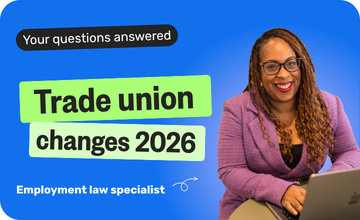
Trade union mini webinar and checklist for October 2026 from Breathe HR and Orchard Employment Law, led by Jemma Fairclough-Haynes

Trade union law changes video and checklist

Find out how to prepare for the Oct 2026 trade union law changes and stay compliant with this checklist and video.

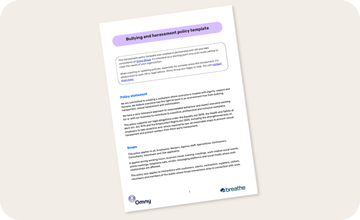
Harassment policy template from Breathe HR and Omny Group for small and medium businesses

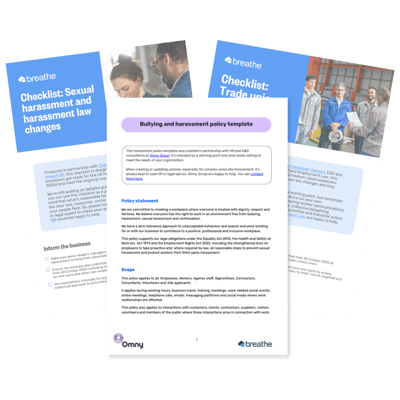
Bullying and harassment policy template

Create or update your harassment policy to ensure your business is compliant with new harassment prevention laws.

Bullying and harassment policy blog card

Writing a bullying and harassment policy guide

Guidance on what a bullying and harassment policy should include and how to create one from experts at Omny Group.

Small business workers review October 2026 UK employment law changes

Oct 2026 UK employment law changes guide

A guide to the October 2026 UK employment law changes and what small and medium businesses need to do.

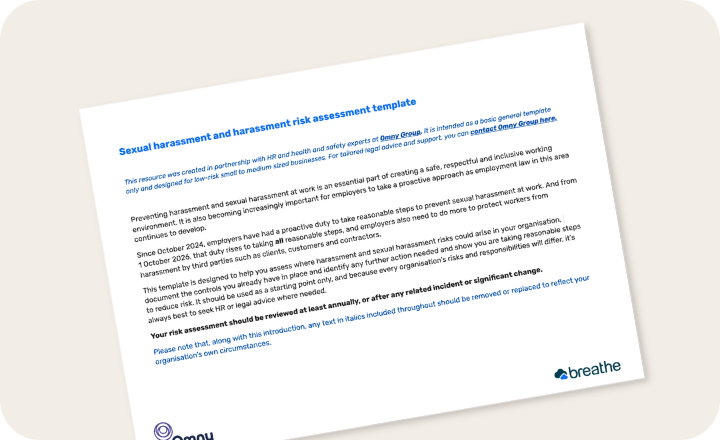
Harassment risk assessment template from Breathe and Omny Group for small and medium businesses

Harassment risk assessment template

Meet the new duty to take all reasonable steps to prevent harassment by performing a harassment risk assessment.

October 2026 UK harassment law changes mini webinar and checklist from Breathe HR and Impact HR, led by Juliet Irving.

Harassment law changes video and checklist

Learn what's changing and what you need to do with this checklist and video on the Oct 2026 harassment law changes.

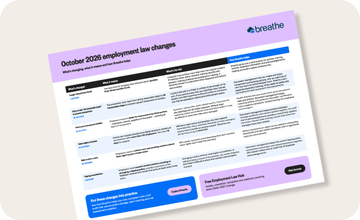
Oct 2026 employment law changes one pager including key dates, next steps and how Breathe HR can help.

Oct 2026 employment law key dates

Key dates to be aware of for October 2026 employment law changes, next steps to take and how Breathe can help.

Why October 2026 matters for small and medium businesses


The Employment Rights Act 2025 is introducing significant changes to UK employment law in stages. October is another important point in that timetable, with changes affecting employment tribunal time limits, harassment protections and trade union rights.

Some changes will apply to almost every employer. Others depend on your workforce, sector, or labour supply arrangements. The practical challenge is working out what is relevant, updating the right documents and making sure managers and employees know what to do.

Since the Fair Work Agency (FWA) took force in April 2026, keeping on top of employment legislation has become even more important. You should be able to show how you've communicated employment rights, trained people, recorded decisions and reviewed your approach.

This toolkit gives you a practical starting point. It helps small and growing businesses take proportionate action without getting lost in legal jargon.


What are the October 2026 UK employment law changes and the key dates?


Employment tribunal time limits increase

From 1 October 2026, the standard time limit for most employment tribunal claims increases from three months to six months. Acas early conciliation will continue to apply, and claimants will still need to notify Acas in the usual way.


Stronger sexual harassment protections

From 30 October 2026, employers will need to take all reasonable steps to prevent sexual harassment of workers. The strengthened duty includes risks created by third parties such as customers, clients, suppliers and members of the public.

From this date, employers are also liable where a third party harasses a worker and the employer has failed to take all reasonable steps to prevent it.


New trade union rights and responsibilities

Several trade union reforms take effect on 30 October 2026. Independent trade unions gain legal rights to request physical or digital access to workers in businesses with more than 20 employees. Employers will have 15 days to respond.

Employers also have a new duty to inform workers of their statutory right to join a trade union. Other changes affect industrial action, trade union representatives, union equality representatives, facilities, paid time off and recognition campaigns.


What's happening with the Acas Code of Practice on grievance and disciplinary procedures?


Acas is consulting on a proposed update to its Code of Practice on grievance and disciplinary procedures. The draft places more emphasis on resolving workplace concerns early and informally, with clearer expectations around mediation, reasonable adjustments, suspension, manager training and explaining what informal steps were taken before a matter moves into a formal process.

The consultation closes on 23 September 2026. The draft Code is not currently in force, and no implementation date has been confirmed, so it does not automatically require businesses to change their procedures in October. You should continue to follow the current Code unless and until a revised version takes effect.

You can still use the consultation as a prompt to review your grievance procedures, disciplinary procedures and manager training. Keep monitoring Acas guidance and the Breathe Employment Law Hub for any updates.


What employment law changes have already taken effect in 2026?


Several 2026 updates are already in force, including:


  • Day-one statutory sick pay SSP with the lower earnings limit removed.

  • April’s national minimum wage increases.

  • Day-one paternity leave and unpaid parental leave.

  • Bereaved partner’s paternity leave for up to 52 weeks.

  • The maximum protective award for failure to consult on collective redunancy has increased to 180 days' pay.

  • Enhanced protections for whistleblowers reporting sexual harassment.

  • Employers must keep holiday records for at least 6 years.


Together, these changes are a useful prompt to review the payroll, leave and HR processes you use to support employees.

You can read more detail on our Employment Law Hub.


What changes are happening in 2027?


From 1 January 2027, unfair dismissal rights are changing. The qualifying period, previously two years, becomes six months, meaning more employees may be able to claim unfair dismissal. Compensation for unfair dismissal will also no longer have a cap.

Fire and rehire will be automatically unfair in most cases from 1 January 2027 too.

2027 also brings changes to flexible working and zero hour contracts, as well as gender pay gap, ethnicity and disability pay gap reporting. New rules will mean that refusals for flexible working requests must be reasonable, and employers must explain their reasons. And employers with more than 250 workers must start to publish equality action plans and menopause action plans.

Keep checking our Employment Law Hub for further guidance.
Other employment law resources

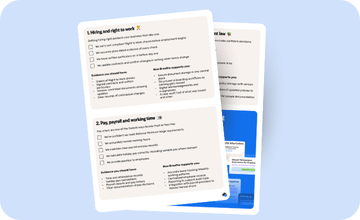
Compliance checklist for UK small and medium businesses to check your business is compliant with UK requirements and employment law.

Compliance checklist for UK small businesses

Use this checklist to sense check compliance in your small business today. It's designed to help you spot gaps and strengthen your processes.

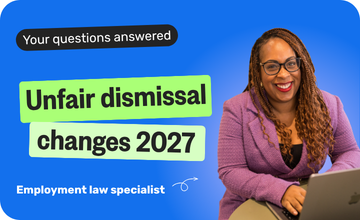
Unfair dismissal law changes January 2027 video and checklist from Breathe HR and Orchard Employment Law, led by Jemma Fairclough-Haynes

Unfair dismissal law changes video and checklist

Get your business and performance processes ready for the January 2027 unfair dismissal law changes with this video and checklist.

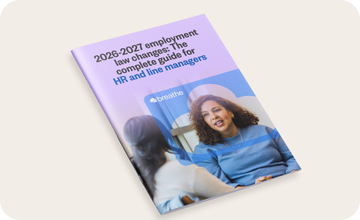
The complete guide to 2026-2027 employment law changes for HR and line managers by Breathe HR

2026-27 employment law changes e-book

UK employment law is going through the biggest shake-up in a generation. Get this complete guide to the 2026 and 2027 changes to help you stay ahead.

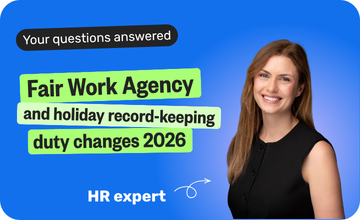
FWA and holiday record keeping duty video and checklist from Breathe HR and Impact HR, led by Juliet Irving.

FWA and holiday record-keeping video and checklist

Use this video and checklist to make sure you're staying compliant with the new six year holiday records rule and Fair Work Agency requirements.

How Breathe help you stay compliant day-to-day


Employment law changes are easier to manage when your wider HR processes, people records and compliance evidence are organised in one place. Breathe helps small and growing businesses stay compliant and build consistent ways of working across everyday HR - not just respond to one legislative deadline.


With Breathe, you can:


  • Store policies, employment contracts and HR documents securely, with version history.

  • Share documents with employees and capture digital acknowledgements.

  • Build onboarding workflows that include employment rights information and required documents.

  • Create risk assessments, assign actions and keep review dates visible.

  • Assign and track relevant training for employees, managers and new starters.

  • Support performance management with clear objectives, feedback and action records.

  • Manage holiday, absence and statutory leave records in a central system.

  • Keep a clearer record of people processes, communications and completed actions.


Frequently Asked Questions

  • What are the key changes to UK employment law in 2026?

  • What is the Employment Rights Act 2025?

  • What are the new sexual harassment laws?

  • What are the new trade union laws?

  • What is the employment tribunal time limit from October 2026?

  • What claims can be brought in the employment tribunal?

  • What is the difference between a grievance procedure and a disciplinary procedure?

  • Do employers have to follow the Acas Codes of Practice?

Join over 17,000 SMEs that choose Breathe as their #1 HR software provider

Group 29 Group 29 (1)