Start the conversation early
Whether you're dealing with short-term repeated absences or a longer period of leave, the first step is always to talk to your employee. This might happen during a welfare meeting while they're off, or as part of a return-to-work meeting. Either way, the conversation should focus on:
-
The reason for the absence
-
The nature of their illness or condition
-
How it's affecting them day-to-day
-
How long they're likely to be absent for
Where to start as a manager
Talk to the employee early and ask what would help them. They often know better than anyone, but the final decision on what's reasonable rests with the employer.
Seek medical input where the picture isn't clear. An occupational health referral or GP report (with the employee's consent) gives you a much stronger basis for any decisions you make.
Agree a review period with the employee and check in regularly on whether any support you've put in place is working.
💡 Quick tip for line managers
When someone goes off sick, reach out with a simple, warm message. Don't wait for them to contact you first. Ask how they’re doing and actively listen to the answer. Try to focus on what their condition means for them day to day, and what might help.
Protect against disability discrimination
Based on the Equality Act 2010, employers are required to make reasonable adjustments for employees with a disability. These adjustments are steps that try to remove the difficulties the employee faces because of their condition.
Although there’s no fixed list of reasonable adjustments, you might choose from:
-
Flexible working or reduced working hours
-
A phased return to work
-
Changed duties or a different role
-
Additional breaks during the working day
-
Reduced workload or output expectations
Assuming what someone can or can't do based on their health or medical condition can backfire badly for employers. Don't make decisions based solely on someone's health condition, and never single people out.
💡 Quick tip for line managers
Keep records of all conversations and medical information, and store them confidentially in a secure, user-friendly system like Breathe. If an employee brings a discrimination claim against you, strong documentation is your evidence.
Recognise the difference between capability and misconduct
When an employee is off sick, you might sometimes be tempted to treat the situation as a conduct issue, particularly if absences are frequent or the business is under pressure. But sickness absence should be treated as a capability matter, and the legal tests for the two are very different.
Misconduct is about behaviour – something the employee has chosen to do.
Capability is about an employee's ability to do their job, whether due to illness, injury or another health-related reason.
Mixing the two is a common mistake, but it can undermine your position if things escalate. Unless you have good reason to believe an employee is misrepresenting their absence, treat it as capability. This involves:
💡 Quick tip for line managers
If you're ever unsure whether a situation is a capability or conduct issue, take advice before you act. Starting down the wrong path, even if you have good intentions, can make things much harder to resolve fairly.
For more advice on recognising the difference between capability and misconduct, read our line manager’s guide to disciplinary issues.
Know how dismissals work for those on long-term absence
It’s legally possible to dismiss employees who are on long-term sick leave, but only as a last resort. Before dismissing someone, you should have actively considered and offered alternatives, such as a different role, adjusted or reduced hours, or an extended period of unpaid leave.
If dismissal feels like the right choice, do the following things:
-
Collect comprehensive medical evidence. An occupational health physician referral carries more weight at tribunal than a nurse referral, and the same applies to a thorough GP assessment. If you're concerned about where things are heading, invest in the right level of evidence early.
-
Keep the dialogue open. Prove you've followed your own sickness absence policy and exhausted all support options. Keep detailed, accurate records of every conversation.
-
Communicate fairly. Notify the employee clearly and give them reasonable notice ahead of any meeting. They're entitled to know the potential outcome, to bring a colleague or trade union representative, and to appeal any decision made.
💡 Quick tip for line managers
If absence is becoming long-term and you don’t know how to proceed, get HR or legal support before you act, particularly where disability may be a factor or medical advice is unclear.
Understand how holidays work during extended absence
Employees who are off sick for a long time can still take their paid annual leave, but it's their choice to make and you can't force them to take it. Here’s how it works.
-
If you approve the request, sick leave pauses while the employee takes their holiday and they receive their pay as normal.
-
When they return from holiday, hold a return-to-work meeting. If they're well enough to come back, discuss what support and adjustments they need. If they're not, sick leave continues.
-
If an employee hasn't been able to use their annual leave during a period of sickness, they're allowed to carry it forward into the next leave year. They must use their leave within 18 months of the date it was carried over.
💡 Quick tip for line managers
An employee might not be well enough to work but could still benefit from taking holiday. A mental health condition, for example, can be greatly helped by time away. If an employee requests holiday while off sick, consider it carefully and sympathetically.
Calculate sick pay accurately
Sick pay can feel complicated, but the basics are straightforward. Statutory Sick Pay (SSP) is the legal minimum for every eligible employee, and from 6 April 2026, the Employment Rights Act 2025 has introduced some changes to be aware of:
-
SSP kicks in from the first day of illness. The old three-day waiting period is gone for good.
-
The Lower Earnings Limit has been scrapped, so lower-paid, part-time and zero-hours workers are now eligible too, supporting more people than ever before.
SSP is payable for up to 28 weeks at either the flat rate or up to 80% of the employee’s average weekly earnings, whichever is lower. The rate is reviewed annually by the government.
If your organisation offers enhanced sick pay on top of the statutory minimum, make sure your policy spells it out clearly, including how much, for how long, and whether length of service plays a part. Writing this down saves a lot of awkward conversations and even legal disputes later.
If an employee is getting close to the end of their 28-week SSP entitlement, point them towards Employment and Support Allowance (ESA). It's a small thing that can make a big difference when someone is already going through a tough time.
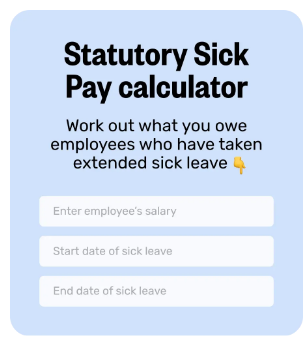
Need help calculating SSP for an employee? Use our free calculator.
💡 Quick tip for line managers
Before an employee asks what they're entitled to, make sure you know the answer. Check your sickness absence policy so you're ready to have the conversation with confidence.
Look after your people and the rest will follow
Your people will always remember how you handled things when they were at their most vulnerable. Managing long-term sickness well comes down to starting early, staying consistent, and keeping the lines of communication open. Once you've decided how to support your employee, review everything regularly together, whether that's weekly, fortnightly or monthly, and adjust as things change.
With thanks to Thomas Fuller, Associate at Omny Law, and Robert Burden, Managing Consultant at KaneHR, for their expert contributions to this guide.
This guide is intended for general informational purposes only and does not constitute legal advice. Employment law is subject to change, so always seek professional HR or legal advice for your specific situation.


.webp?width=564&height=513&name=Group%2029%20(1).webp)