
.svg)


.svg)
Employment law has been shifting fast. New rules, updated rights, changing expectations. And as of 7 April 2026, a new government body will be responsible for making sure businesses are actually following them.
It's called the Fair Work Agency and it's part of the government's wider 'Make Work Pay' agenda, aimed at tackling workplace exploitation and raising standards across UK businesses.
It hasn't been covered as widely or clearly as many of the other changes coming through the Employment Rights Act, so if it's not on your radar yet, don’t worry - you're not alone.
This blog covers what it is, what it can do, and the practical steps worth taking to protect your business.
Or watch Juliet Irving, Director of HR Operations at Impact HR, run through the details in our on-demand webinar.
Skip to:
-
What is The Fair Work Agency and how is it different from previous legislation
-
Why this matters - especially for small-to-medium sized businesses
What is the Fair Work Agency and how is it different from previous legislation?
The Fair Work Agency (FWA) is a new government body that will bring enforcement of key employment rights into one place. It's part of the Department for Business and Trade and has been introduced through the Employment Rights Act, which gained Royal Assent on 18th December 2025.
Before the Fair Work Agency, employment law enforcement was split across three separate bodies, each with its own remit, its own processes and its own limitations:
-
The Gangmasters and Labour Abuse Authority (GLAA) focused on protecting workers in high-risk sectors like agriculture, food processing and shellfish gathering from exploitation and labour abuse.
-
The Employment Agency Standards Inspectorate (EAS) regulated employment agencies and businesses, making sure they were treating agency workers fairly and following the rules.
-
HMRC's National Minimum Wage team investigated underpayments of the National Minimum and Living Wage.
Because these teams operated independently, there was no joined-up view of a business's overall compliance. An employer could be investigated by one body but fall below the radar of another. Enforcement was inconsistent, and gaps in coverage were common.
The Fair Work Agency changes that. By bringing all three into a new single enforcement body, it creates one central point for enforcement, with a wider remit, more coordinated powers and a sharper focus on everyday employment basics. In short, it's harder to slip through the cracks.
It isn't just there to catch businesses out, though. It's about creating a level playing field. Businesses that already do the right thing shouldn't be undercut by those that don't. The Fair Work Agency is there to support employers who want to be compliant.
It's also somewhere that employers and employees can turn to for help and guidance on employment rights.
The areas it'll focus on include:
-
Whether workers are being paid at or above the National Minimum or Living Wage (once unpaid time, deductions and uniform costs are also factored in)
-
Whether employees are receiving the correct holiday pay, sick pay and other statutory entitlements
-
Whether workers are receiving fair treatment and aren't being exploited
-
Whether employers are keeping accurate, up-to-date records, including payslips, contracts and right-to-work paperwork
-
Whether businesses using agency workers, umbrella companies or labour providers have the right agreements in place
This list is expected to grow over time as the Fair Work Agency takes on a wider range of enforcement responsibilities.
One area particularly worth highlighting is statutory holiday pay. This is the first time that statutory holiday pay will be properly enforced by a state body. Until now, employees had to take action themselves if their holiday pay was withheld. That changes with the Fair Work Agency.
As a new governmental body, the Fair Work Agency will also produce clearer compliance guidance to support employers in understanding their legal obligations.
What powers does the Fair Work Agency have?
The Fair Work Agency has strong powers that are broader and more joined-up than any of its predecessor bodies. Here's what that looks like in practice.
Inspecting workplaces at any time
Fair Work Agency enforcement officers can enter business premises, conduct inspections and investigate complaints without needing a report or complaint from an employee to trigger it.
Penalties for obstructing an investigation or providing false information can include unlimited fines and up to 51 weeks in prison.
Requesting documentation and evidence
To assess compliance, the Fair Work Agency can ask employers to provide evidence at any time. That might include:
-
Employment contracts, letters of engagement or written terms
-
Payslips and bank statements
-
Records of hours worked, such as timesheets, logs or rosters
-
Wage documentation, like pay rise letters
-
Communications with employees, including letters, emails and texts
-
Meeting notes, termination letters and dismissal documents
-
Company policies and handbooks
-
Witness statements
-
Medical certificates
Again, providing false documents or misleading information can lead to unlimited fines and up to 51 weeks in prison.
Fining employers who've underpaid their workers
Fair Work Agency enforcement officers can issue Notices of Underpayment, which require employers to repay arrears to workers within 28 days. They can recover unpaid wages, Statutory Sick Pay, holiday pay and more, going back up to six years.
The fine includes the arrears, plus a mandatory penalty of 200% of the total underpayment, capped at £20,000 per worker. If you pay both the arrears and the penalty within 14 days, the penalty drops to 100%.
Publicly naming non-compliant businesses
Sometimes, the Fair Work Agency will also publicly name and shame non-compliant employers (within a year of their case closing). While this won't happen to every business, it's an additional reputational risk worth being aware of.
Taking cases to employment tribunal on behalf of a worker
The Fair Work Agency can bring civil proceedings to an employment tribunal on behalf of an employee, reducing the burden on the individual. It can also offer legal assistance to employees in civil employment law cases.
Legally enforcing a change in behaviour
Fair Work Agency officers can issue Labour Market Enforcement Undertakings and Labour Market Enforcement Orders to compel businesses to change practices that don't comply with the law.
The difference between the two? An Undertaking is a voluntary, non-court agreement to put things right. An Order is a formal, legally binding court order, issued when an Undertaking is refused, breached, or when the offence is serious.
Breaking a Labour Enforcement Order is a criminal offence and can result in fines or imprisonment.
Recovering enforcement costs from businesses
The Fair Work Agency can charge its own enforcement costs back to employers who are found to be breaking the law. These are separate from any arrears or financial penalties.
The government hasn't published exact figures yet, but they may follow a similar model to the Health and Safety Executive. Based on that, costs could look something like:
-
Up to £1,000 for a simple breach (a standard letter or notice)
-
Up to £2,000 for a standard investigation taking a day or two to resolve
-
Over £20,000 for serious or long-running breaches that take weeks to resolve
This is based on an estimated rate of £150-£200 per hour for an inspector's time. But, these are indicative figures only, not confirmed rates.
When does the Fair Work Agency come into effect?
The Fair Work Agency came into force on 7 April 2026. As of this date, it can monitor businesses, open investigations and take action for any breaches. Employees and employers can now also contact the Fair Work Agency for help and guidance.
Also, be aware that as of 6 April 2026, employers are legally required to maintain adequate holiday and holiday pay records for up to six years.
Why this matters - especially for small-to-medium sized businesses
Most compliance problems don't come from big, obvious mistakes. They come from the small, everyday stuff: holiday calculations that vary depending on who's doing them, employment contracts that haven't been updated in years, or HR records spread across email threads and spreadsheets.
That's where the real risk tends to sit. And it's also where things get harder to unpick quickly if an inspector, an employee, or a tribunal asks you to show your working.
For small and medium-sized businesses, this matters more than it might for larger organisations. You're less likely to have a dedicated legal or compliance team checking everything, and HR responsibilities often sit with whoever has capacity, whether that's a founder, an office manager or a small HR function covering a lot of ground.
That's not a criticism - it's just the reality of running a growing business. But it does mean the everyday admin gaps that the Fair Work Agency are looking at are more common, and often harder to spot.
What employers need to do
The Fair Work Agency hasn't changed the rules. But it has put a sharper spotlight on whether employment rights basics are in place and easy to evidence. For most businesses, that's less about learning new legislation and more about getting organised.
There's no formal checklist from the government, but there are some straightforward steps worth taking to protect your business:
-
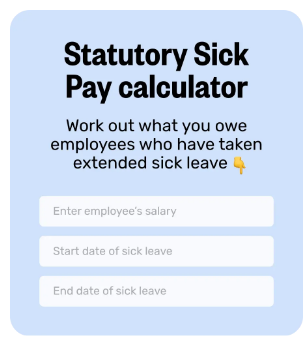
Review your pay calculations. Check that everyone is paid at or above the correct National Minimum or Living Wage, factoring in unpaid time, deductions and uniform costs. Do the same for holiday pay, Statutory Sick Pay and any other statutory payments.
-
Check your records. Wages, hours and holiday records should be accurate, easily accessible and stored securely. As of 6 April 2026, employers have a legal duty to maintain adequate holiday and holiday pay records for up to six years.
-
Update employment contracts. Every employee should have a written contract or statement of terms that reflects how they actually work and are paid, including part-time and casual staff.
-
Review your written policies. Make sure you have up-to-date policies covering at least holiday, sickness, working time and the use of agency or temporary workers.
-
Look at how concerns are raised. Employees should know how to raise concerns about pay, holiday or treatment, and you should have a clear process for recording and following up on those concerns.
-
Check your agency and umbrella worker arrangements. If you work with agency workers, umbrella companies or labour providers, make sure written agreements are in place and that they're meeting minimum pay and holiday requirements too.
-
Brief your managers. Payroll, HR and people managers should understand what the Fair Work Agency is, which rights it enforces and what good record-keeping looks like in practice.
-
If you operate in higher-risk sectors, you should also review your obligations under modern slavery legislation.
Not sure where you stand? Our free 5-minute quiz helps you quickly check if your holiday pay, wages and HR records are in good shape, and where small fixes could reduce risk.
How Breathe can help
If your HR admin is spread across spreadsheets and inboxes, now's a good time to bring it together.
The areas the Fair Work Agency focuses on, contracts, policies, holiday, pay and records, are exactly what Breathe keeps organised in one place. With Breathe, you can:
-
Centralise contracts and policies so they’re not buried in inboxes.
-
Track holiday and sickness clearly, with balances and history in one place.
-
Keep employment records organised, making it easier to show how decisions were made if questions ever arise.
So while the Fair Work Agency sharpens the spotlight on everyday employment basics, Breathe helps you stay confident that yours are under control and easy to evidence when it matters. Try Breathe for free for 14 days.

We also have a range of free employment law resources on our website to help you stay up to date and compliant. Explore our employment law resources.

 Employment Law