Absence Management Software

Track sickness, holiday and unplanned absence in one place. Cut admin time and look after your team's wellbeing.
Mechanic lady

Loved by 17,000+ UK SMEs

Wrexham FC RSPCA Scrub Daddy West Sussex Mind Royal Philharmonic Orchestra Brixton Brewery Ecologi Dryrobe Sussex Wildlife Trust
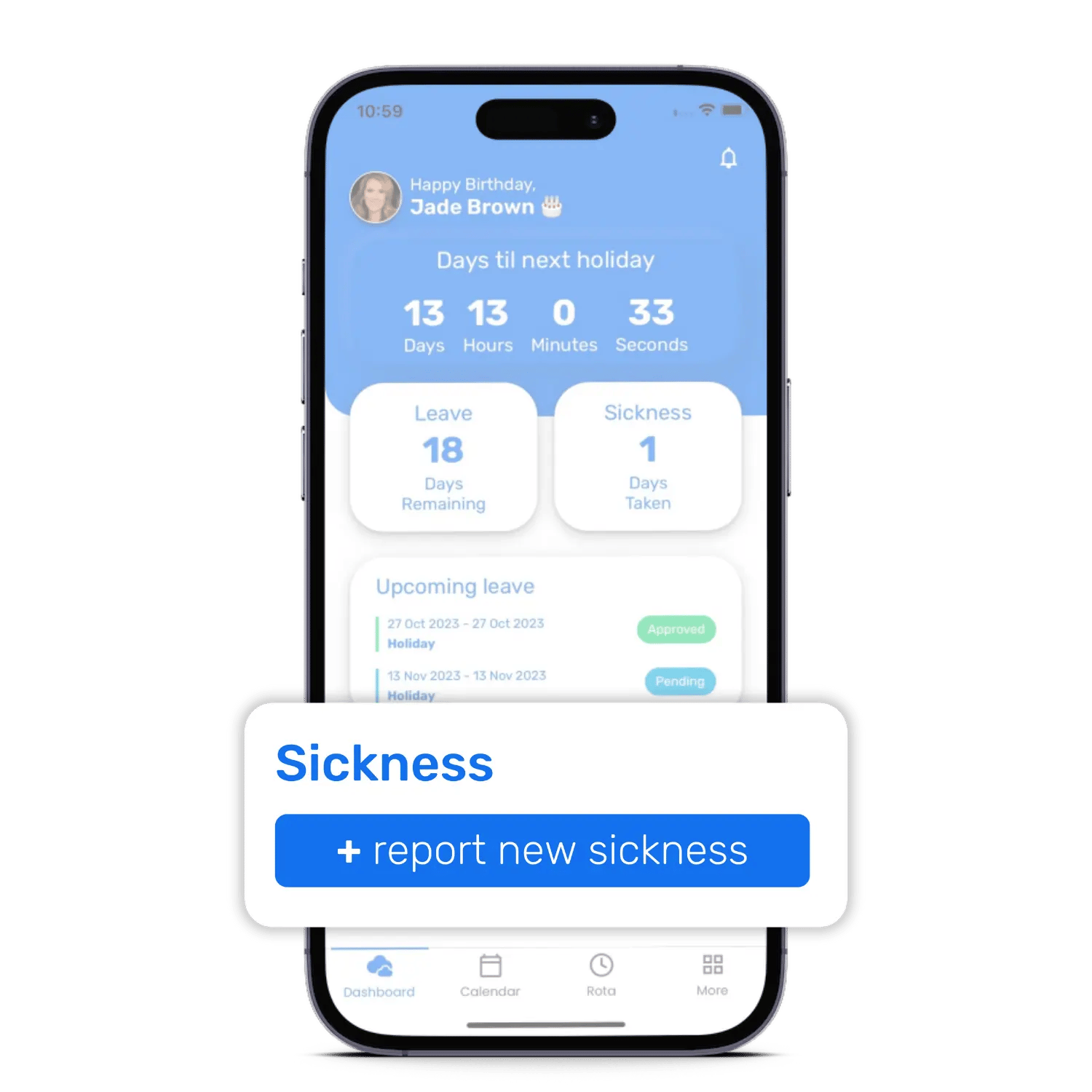
Breathe HR Mobile app - add sickness

What is absence management software?

Absence management software helps you record, monitor, and report on all types of employee time off, including sickness, holiday, and other leave. It replaces spreadsheets and email chains with a single secure system, giving HR teams and line managers a clear view of who's in, who's off, and why.

What does absence management software do?

A good absence management system gives HR teams and managers the tools to:

  • Record sickness and holiday in one secure place
  • Set custom sickness trigger rules
  • Let employees book leave

Your complete toolkit for managing absence

Give managers and employees simple tools to log absence, book holiday, and spot trends, without the cost or complexity of enterprise HR software.

Record absence accurately in one secure place

Capture every sickness, holiday and unplanned absence in a single system that's accessible from any device.

Employees log their absences themselves through the People Portal mobile app, so records stay accurate, and managers stop chasing emails.
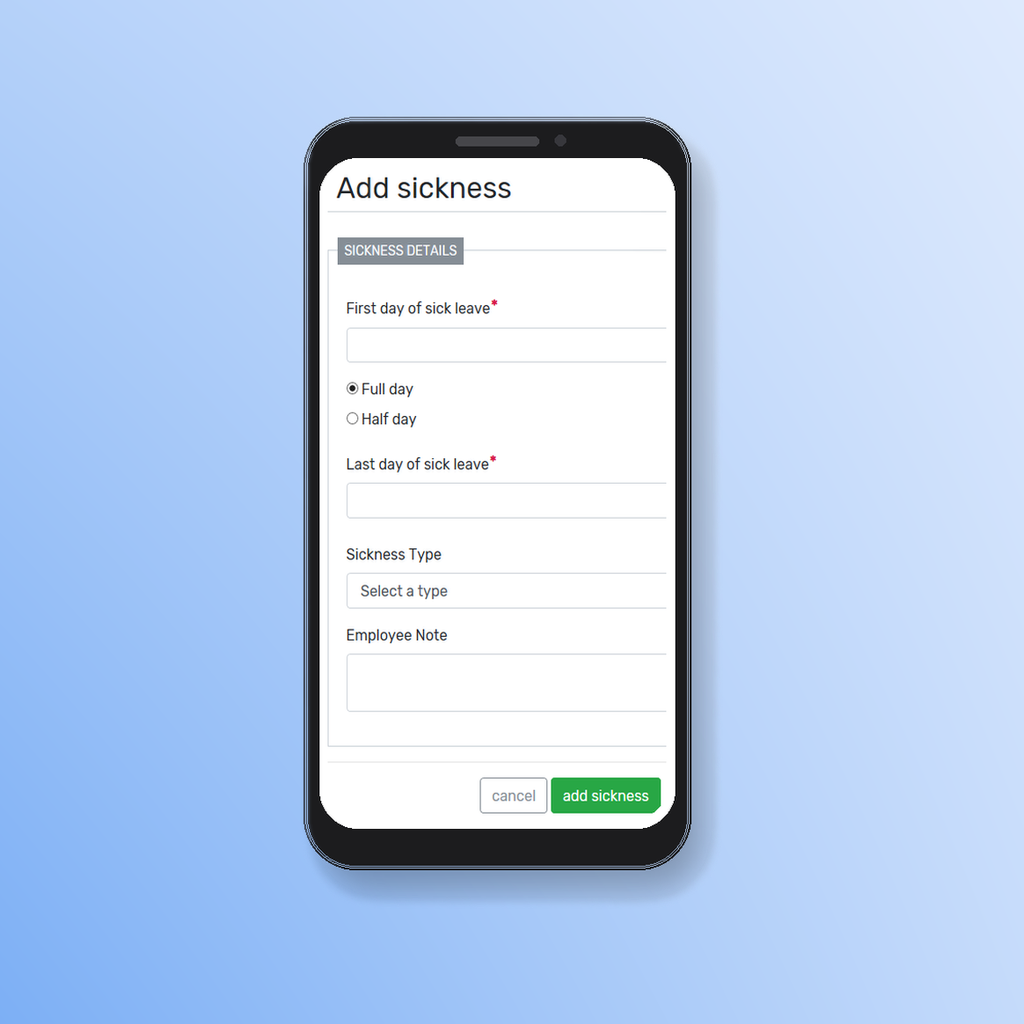
Image showcasing booking sick leave on the Breathe HR mobile app, on a blue gradient background

Spot absence patterns before they become problems

Set custom sickness trigger rules, including Bradford Factor thresholds, and get alerts when an employee crosses them.

Reporting dashboards surface trends in short-term, long-term and unplanned absence, so you can step in with the right support early.
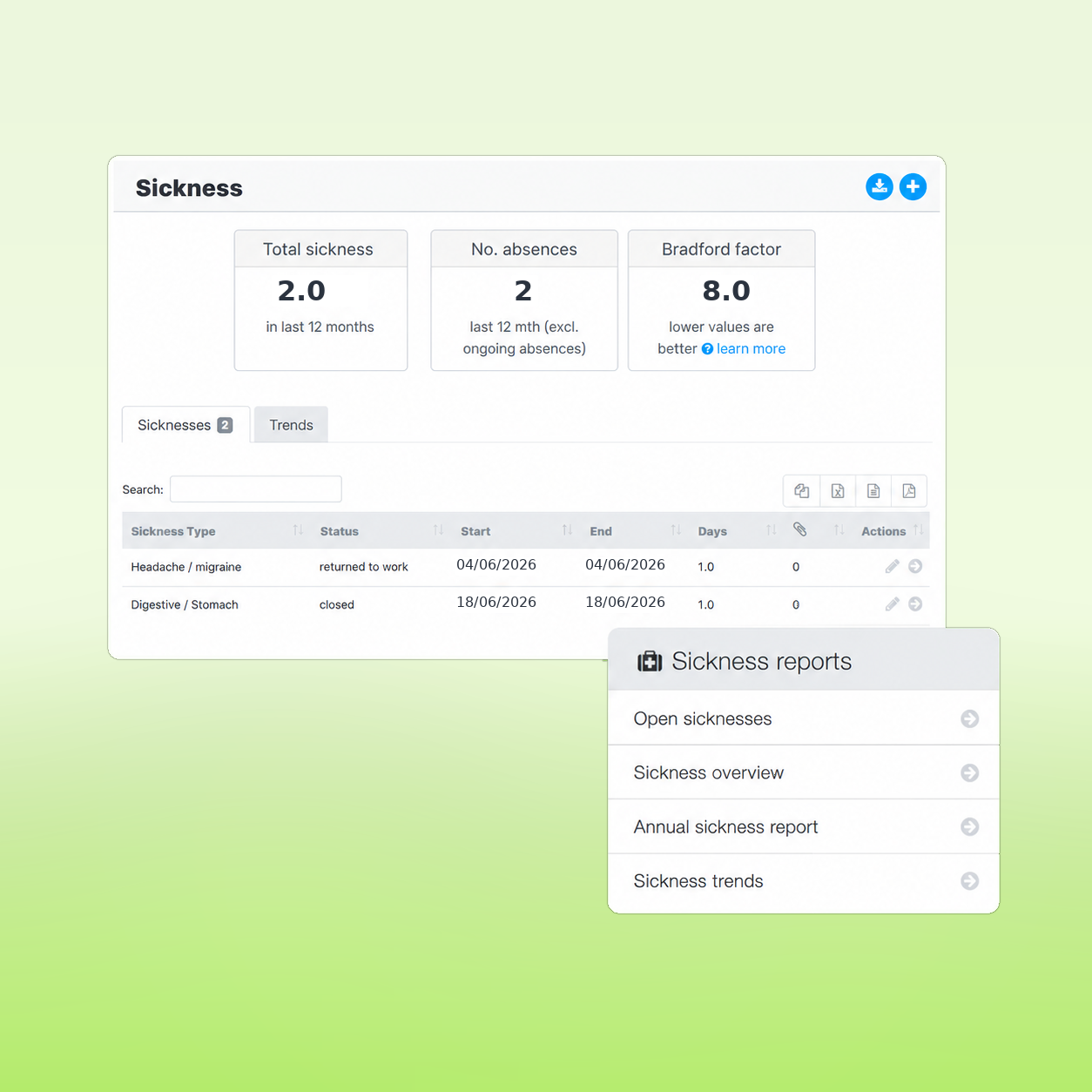
An image highlighting Breathe HR's sickness dashboard and reporting functionality on a green gradient background

Run holiday booking without the back-and-forth

Employees submit absence requests in a few clicks. Managers approve from their dashboard. Shared calendars show who's in and who's off across the team.

Automatic reminders and entitlement tracking replace the spreadsheet, so nobody gets accidentally booked over Christmas cover.
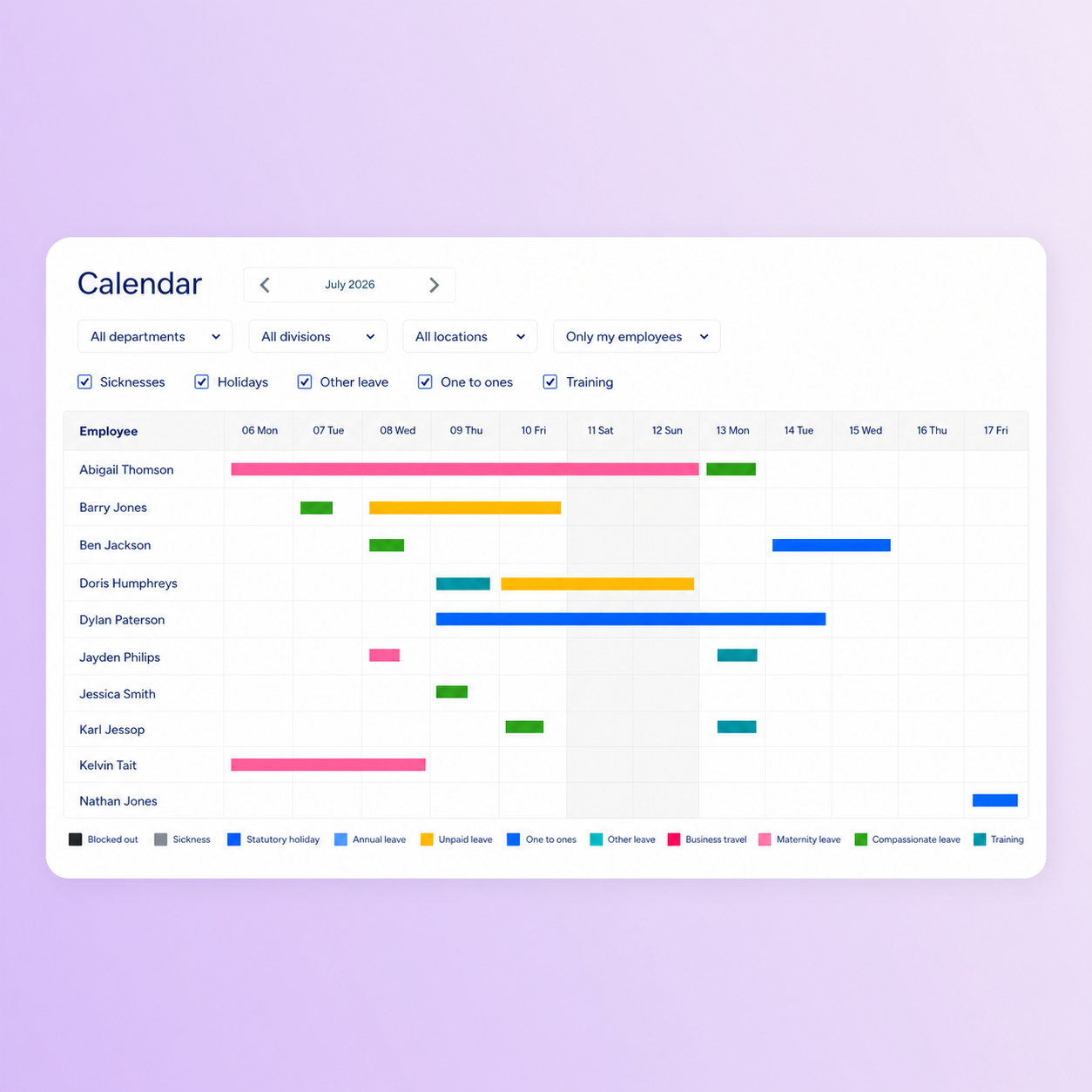
An image highlighting Breathe HR's leave calendar for different types of leave and absences on a purple gradient background
Image showcasing booking sick leave on the Breathe HR mobile app, on a blue gradient background
An image highlighting Breathe HR's sickness dashboard and reporting functionality on a green gradient background
An image highlighting Breathe HR's leave calendar for different types of leave and absences on a purple gradient background

Our survey says...

 In our 2025 customer survey, we asked Breathe users how our software supports their day-to-day HR. Their answers show the real impact Breathe is having on teams like yours. 

0%

"The Breathe platform is intuitive, easy to use, and requires minimal training for my team."

0%

"Breathe’s security and data protection standards give us confidence in handling sensitive employee information."

0%

"Whenever we need support, Breathe’s support team is responsive, helpful, and resolves issues quickly."

Breathe makes HR admin a breeze

With 40+ features and growing, Breathe makes HR admin easy for businesses with up to 250 people.

What good absence management looks like in practice

Ask any HR director what their absence problem looks like, and they'll point to the total sick days, Bradford Factor scores, or absence rate by quarter. But the number is rarely the actual problem. The problem sits in everything that has to happen around the absence: the cover that gets arranged in a hurry, the meetings that get rescheduled, the spreadsheet at month-end that nobody enjoys finishing. Done badly, absence management buries those costs in forwarded emails and uncomfortable Monday morning conversations. Done well, it gives HR teams and line managers a clear view of what's happening across the business, plus a simple set of steps for handling each type of leave fairly. The point is to support people when they need it without losing visibility of the business.

It starts with a policy peopel can actually find

Good absence management starts with clear policies that everyone in the business actually understands. That means setting out what counts as sickness, how holiday entitlement works, who employees should notify when they're off, and how absences are reviewed when someone returns. When policies live somewhere employees can find them, the awkward conversations get easier. There's no debate about whether someone is owed a half-day or whether they need a fit note. It's written down. A modern absence management system holds these policies alongside individual records, so managers and employees are looking at the same information. Consistency at this stage prevents most of the disputes that come later.

Recording absence shouldn’t fall on HR to chase

Once policies are in place, the focus shifts to how absence actually gets recorded. The old way involved a manager filling in a spreadsheet days after the fact, or an employee emailing HR who then had to update three different places. Modern absence management software lets employees log their own absence through a mobile app or web portal, and pairs that with time tracking so working hours and time off sit in the same view. They can request a day's holiday, mark themselves as sick, or upload supporting documents like fit notes in seconds. Managers see updates in real time and approve them with a click. The result is faster, more accurate records, and far less HR admin to chase up at month-end.

Monitoring patterns is not the same as surveillance

With clean records flowing in, the question becomes what to do with them. Monitoring absence isn't about watching every move. It's about noticing patterns that a manager couldn't reasonably catch on their own. The tension here is between supportive oversight and surveillance, and the line shifts depending on who's looking. A trigger rule that alerts HR when an employee's Bradford Factor score crosses a set threshold is supportive. A real-time dashboard tracking every minute someone is offline is not. The job of absence management software is to surface what matters, when it matters, and leave the manager to lead the conversation that follows.

The return-to-work conversation is part of the process, not an afterthought

When someone returns from absence, especially extended sickness, the conversation matters as much as the data. A consistent return-to-work process gives both manager and employee a clear structure: what happened during the absence, and what support might help next time. Logging that conversation in the same system as the absence record means it's there for context further down the line. Over months and years, those notes build a fair, transparent picture of how the business has supported each person. It also protects everyone if a situation does escalate, because there's a clear trail of what was agreed and when.

Consistency is what makes the whole thing fair

Threading through all of this is the question of fairness. Absence is a sensitive area. Two people with similar records can feel very differently treated if managers handle them inconsistently. A central system makes consistency much easier to deliver. The same triggers apply to everyone. The same return-to-work template gets used. The same reporting shows up in management meetings. Bias still exists, but the structure reduces how much it shapes outcomes. For employees, that consistency builds trust. For managers, it removes the dread of having to invent a process every time.

Good data turns absence into a business case

Pulled together, the result is more than a tracking tool. The data builds a business case. When HR can go to leadership with evidence that mental health absences spike every November, or that one department's unplanned absence is double the company average, the conversation changes. Investment in wellbeing initiatives stops being a soft ask and becomes a justified spend. Line manager training moves up the priority list. That's the bigger payoff: better decisions, made on actual workforce management data, and a workforce that can feel the difference.

Frequently asked questions

  • What is the absence management process?

  • Can I dismiss an employee for absence?

  • Is absence management the same as leave management?

  • What's the difference between absence and time off in lieu (TOIL)?

  • What is the difference between attendance management and absence management?

  • How does absence management software support managers?

  • Can the software help with sickness absence tracking?

  • How much does absence management software cost?

  • Does it integrate with other HR or payroll systems?

Join over 17,000 SMEs that choose Breathe as their #1 HR software provider

Group 29 Group 29 (1)